Closing the Gaps in Chronic Illness Support with Cyndii Sinex
Chronic illness affects millions of people worldwide, yet support systems remain fragmented, difficult to navigate, and often inaccessible. For many, the journey is not just medical but also deeply isolating.
In this episode of Changing Minds & Changing Lives, Julie Sowash sits down with Cyndii Sinex, public health practitioner and founder of the upcoming Chronic Illness Hotline, to explore how lived experience can drive meaningful change.
After more than a decade navigating misdiagnosis, medical error, and systemic barriers, Cyndii is transforming her experience into a first-of-its-kind solution: a free, text-based, peer-support hotline designed for people living with chronic illness, pain, injury, and neurodivergence.
This conversation is both eye-opening and hopeful—offering a powerful reminder that support doesn’t have to be complicated to be life-changing.
Key Takeaways
- Why so many chronic illness sufferers fall through the cracks of the medical system
- The emotional toll of chronic illness—including isolation, loss, and uncertainty
- How peer support can fill critical gaps in care
- What it takes to build a scalable, accessible support network
- The long-term vision: using real data to influence healthcare policy and systemic change
Resources & Links
- Chronic Illness Hotline - https://chronicillnesshotline.org/
- Support the Mission - https://chronicillnesshotline.org/donate/
About the Guest
Cyndii Sinex, MPH, is a public health practitioner, trained health educator, and patient advocate. After years of navigating a misdiagnosis and complex healthcare barriers, she founded the Chronic Illness Hotline—an initiative designed to provide accessible, peer-based emotional support for individuals living with chronic illness and related conditions.
Follow her on LinkedIn: https://www.linkedin.com/in/cyndii/ | https://www.linkedin.com/company/chronic-illness-hotline/
About the Host
Julie Sowash is a strategic advisor, disability inclusion leader, and co‑founder of Disability Solutions. She is the CEO of Catch 22 Group and is the Job Board Doctor.
Follow Her on LinkedIn: https://www.linkedin.com/in/juliesowash/
Changing Minds, Changing Lives
Cyndii Sinex
May 2026
Julie Sowash
Welcome back to Changing Minds, Changing Lives. My name is Julie Sowash, co-founder and strategic advisor for Disability Solutions, CEO of Catch 22 Group. I'm excited to be back with you all again today. I was glancing through our YouTube channel this morning, and I cannot believe A) how many podcasts we have for Changing Minds, Changing Lives. But if you guys are not yet following Ashley Sims, our director of marketing on the Disability @ Work podcast, can also find those on our YouTube channel, which is just Disability Solutions. And I'm loving some of the topics that Ashley's doing. How job hunting or job hugging isn’t disengagement, psychological safety, what employees with disabilities look for when taking leadership roles, and how they may leave the company if they're not getting that opportunity for leadership in your organization. So check out the Disability @ Work podcast. Catch up on past episodes of Changing Minds, Changing Lives. We had Myles on earlier this month. We've got the Dateability app. Catch up with Keith Meadows, our executive director, when I got to sit down and talk to him at the end of the year last year. Lots of great content on our YouTube channel, but that's enough pitch for today. I want to bring in our guests who is bringing a really different topic, unusually, than we talk about here on our Disability Solutions podcast. We’re gonna talk about chronic illness. So chronic illness affects millions, but support is definitely inconsistent a lot of times inaccessible. And it can be very isolating emotionally. Today's guest is working to change that. Cyndii Sinex, master of public health, is a public health practitioner and a trained health educator whose work is rooted in resilience and patient advocacy. After more of a, more than a decade, wow, of navigating a misdiagnosis and medical error, she turned her personal experience into purpose, working to amplify the voices and needs of marginalized communities. She is also the founder of the soon to come Chronic Illness Hotline, an initiative designed to support people living with chronic illness, pain, injury and neurodivergence through accessible and text-based communication and peer support, which I love. Cyndii, welcome to Changing Minds, Changing Lives.
Cyndii Sinex
Hello, I'm so happy to be here.
Julie Sowash
Oh, thank you. Thank you for coming on and helping our audience to understand about a group that sometimes gets left out of our larger disability conversation. So I love that. We always need to be more holistic in our thought process. So tell me a little bit about your background and what led you to focus on chronic illness support?
Cyndii Sinex
Well, my background is in public health. I have my Master's of Public Health, some undergrad work in that. I always wanted to be a health teacher and be within the school system. But then my own health took a turn. And as you said, you know, I had to navigate a medical error and misdiagnosis and mistreatment for a very long time. And that really gave me personal insight into our health care system and just how drastically your life changes when you get chronic illness. We also, like you said, the chronic pain, injury, disability, neurodivergent community kind of have all those come together is something that I realized, wow, there's some things out here, but really, our own hotline can change how people are able to access resources that I just didn't even know what I needed. To be able to Google, like, what am I? I don't even know what I'm looking for because I'm so far in this situation that being able to have kind of like a peer support person that could identify, like, hey, did you know this exists or that exists? As well as just a safe place to have that conversation, whether my friends didn't understand or even if they did because they lived the lifestyle, they might not always have the energy. So having someone there, I just knew that it would make such a big difference. So we've been working on trying to get this launched. We look at it as not this brand new service, but that we are adding to the services that are already available. There's a veterans’ hotline, there's the Trevor Project, there's the 988. There's all these amazing things. And our community comes in at about 350 million people. And we'd love to be able to provide this free, 24/7 support system.
Julie Sowash
Yeah, I love that. One of the things that I have found that’s so beneficial about social media, in a time where there's so much that's not beneficial about social media, is the way that it can bring and has brought together disability communities to support each other. And I've seen, you know, literally people I don't know just impact each other's lives and change other's lives who would otherwise never meet. So I think, you know, what you bring up in that lived experience.
Cyndii Sinex
Yeah.
Julie Sowash
It really does become very, very critical. So if you don't mind sharing, what kind of gaps did you personally experience in navigating your chronic illness?
Cyndii Sinex
I had a hard time being able to get some of the support systems that are, like, at our government. Like, being able to get my SSDI or SSI long-term disability policy that I did have, that was private, that was there for a situation like this. I couldn't get an official diagnosis for the longest time. And that nullified all of those, you know, financial support. It left me in a place where I, you know, there's, like you said, social media. There's all these amazing communities for all of these different health issues. But if you don't have the specific diagnosis, you're like, where do I fit in? And I was always accepted into spaces that were similar enough, like, oh, I'm struggling with these symptoms. But that was the two things that, like, left me extra isolated and losing everything as quickly as you can.
Julie Sowash
Yeah. I mean, it's such a great point. You know, there are a myriad of resources available to support communities with disabilities, with chronic illness, but they are so hard to navigate. As someone who comes from a Medicaid/Medicare background, who's worked for, you know, state government, we had a rule at Medicaid in the state of Indiana. It took about 18 months to get a working knowledge, a working knowledge, not expert knowledge, working knowledge of all the programs that we offer. And watching it from the inside out, I just can't imagine myself trying to not just manage my health-related issues, but then this entirely new system of bureaucracy that is incredibly complex and is not very friendly by design.
Cyndii Sinex
Right. It's kind of on purpose to kind of weed out those that are trying to take advantage of the situation. But when you are at your sickest, it makes it even more complicated. It makes it so stifling. And like you said, this is a state benefit. So 49 other different ways to do it and managing how you live. And we, goal is to be the most. We want to be very, one of the top, kind of, community centers. Because someone, there's amazing programs everywhere. They're different by every state. Some of them are local, some of them national, and we don't know that there are all there. So if you had one place that is really being able to keep track of all of the different resources for all of the different programs, for all of the different illnesses and disabilities and neurodivergent, and are they online or are they professional, or is it a small grassroots group? What is it? Who is it? Where are they? And how do we keep track of all of that? Because there's a lot of programs that aren't being utilized that could change people's lives incredibly, and they don't even realize it.
Julie Sowash
Yeah. No, that's that's such a great point. And it's there's so much information to collate.
Cyndii Sinex
Yeah.
Julie Sowash
Having a place to find that is just critical. So kind of walk us through your vision. When someone reaches out to you on your team on the hotline, what can they expect?
Cyndii Sinex
So we did have a pilot program, a very successful pilot program from 2021, 2023, 2023. The start of the pandemic is where we jumped in. And we did a small pilot program during that. So we do have some real data about like what people are kind of looking for. So you text. It’s gonna be text-based at first. We do have fundraising goals to add a call line eventually. But you text the hotline. A certified, by us, trained by us, compassion counselor, is what we're gonna call the person that responds. They will just let you know that they're on the line. And you can start talking with us about whatever you're dealing with. We do not require you to introduce yourself. You do not need to tell a diagnosis. You are welcome because you are part of our community. And we say if it affects your life, it affects your health. So it can be anything from, you know, the big, big triggering items. I have a test and upcoming results from a test and very nervous. I'm terrified to schedule this appointment, because I don't want the answers. I haven't gone to the dentist because X, Y and Z, and it's a problem and I know I need to get the confidence to make that. I've lost my best friend. I thought that they would always be there for me, and since my diagnosis, they've really ghosted me. Those, losing my job. I don't know how to talk with my boss about what's going on. I want to practice advocating for my doctors. Those big things all the way down to smaller things that are just, like, my roommate is annoying me, and it’s not their fault, what they're doing isn't anything wrong. But I have a migraine and they didn't realize, and I just, if I don't blow this off, I might blow up at them. So I just wanted to rant about it. I had a Starbucks date planned with a friend. They had to cancel because their child’s sick. They didn't do anything wrong. I'm so happy that they're gonna be there for their child.
But reminds me that I don't drive and I'm isolated. I never get to go to Starbucks and I was looking forward to this. And it's a little tiny thing, but it's a big thing. It's a big reminder of all of the changes. So those are the things that we kind of just, like, let it out. You can talk to us one time and just ask for resources. You can talk to us as much as you need to, because that's kind of this ongoing support system. It doesn't really exist anywhere else where it's just private one-on-one.
Julie Sowash
Right. Yeah, no, that’s great. And I mean, I think that we fail to realize how impactful the small things are when we're watching other people, not just navigate disability or chronic illness, but just navigate life. But then when they turn around and I get my Starbucks date canceled, you know, and I'm really upset, it's like, oh, I understand now that this is incredibly, you know, important to me, especially if I am more isolated and I don't have that constant source of kind of communication and engagement with my community. So kind of tell me, you know, what it would be like to be a volunteer. So if I wanted to come volunteer and to be a compassion, a compassion counselor. Thank you. What would the process be?
Cyndii Sinex
Oh, right. So we are hoping this fall that we have applications open and it is required that you consider yourself to be part of one of those five communities: illness, injury, pain, disability, neurodivergence. You don't have to tell us, but you need to self-identify that that is something that you live with and understand. From there, you're kind of we would love to see people that already have crisis counseling experience. A lot in our community already help out at other tech signs or within other programs, moderating support groups. You don't have to. And then you go at our self-paced training. And you're going to go through you know, log in, go through our lessons, learn, have some practice conversations, get on board, have a mentor to be able to help you through your first conversations. And we were not aware when we started our pilot program of how impactful being a volunteer was going to be. And when we paused our program at the end of the public health emergency, all of us kind of needed a moment to say, wow, this has changed how I talk to people, how I look at people, how I interact with the world, what kind of advocacy needs to be done. So it is something that gives you back way more than you've ever expected. And so we're looking forward to seeing those people that kind of have that calling of, ok, I know that, you know, I would be good at this and I really want to be a part of it. And we're constantly taking input from those volunteers where they say, hey, this worked. Hey, this didn't work. How do we modify? How do we change this? We love to have our community build our voice. What works and sounds good to me, may sound like a childish or something that triggers someone else. So we're constantly looking into making sure that our volunteers really shape our conversations. So, that’s kind of.
Julie Sowash
Yeah, no, and that's really exciting. And I mean, I think, depending on how you are approaching these conversations can also drive meaningful policy conversations and help the volunteers. But you as an organization, be a better voice in state government, in federal government, in health insurance conversations and health provider conversations. That's, I mean, that's really, I think, just such an amazing opportunity to have that direct impact on someone's life every day, but then also to think about how can what we've learned through these conversational needs, can we create systemic policy guidance, systemic change?
Cyndii Sinex
It's like you're in my brain. I am ready to run away from fundraising. I love our community. I'm not a fundraiser. I am, you know, someone that wants to take our data nad have it be the advocacy powerhouse that we should be. We should be able to testify before Congress and get change. We should be able to lobby our congressmen and representatives with real data. I would love to see future Cyndii working for med schools, providing courses to our future especially MDS, but anyone. I’d love to see us at the medical conferences, being able to provide guidance and really help just disrupt the lack of compassion in our health care system. [laughs]
Cyndii Sinex
Yes, yes there is. That's a huge opportunity. So you are fundraising right now.
Cyndii Sinex
Yes.
Julie Sowash
So, tell our audience who may be, you know, corporate leaders who may be individual contributors, how do we donate? And what are you looking to kind of accomplish in the next few months? I know you're hoping to launch by the end of the year.
Cyndii Sinex
We are holding our breath and hoping we can get launched by the end of the year. It will take a, you know, a lot of corporate funding to get into that. We are doing grants, corporate outreach as well. So donations are going to be. Because we launched our pilot program just as a really quick group of volunteers to help with the pandemic, we didn't set up all of our background, kind of like the 501c3. Because we were in it just being like, let's get this done for our community. When we backed out and paused everything, we have come under a fiscal sponsorship, meaning that another nonprofit has us in an umbrella. And it provides us with kind of extra protection and extra help. We have an accountant. We have other people that just the corporate offices need. So when you go to our website, you'll see the link in green to donate right at the top. And that's going to take you to our landing page. It just reminds you you’re gonna be donating to our Project Build. That is our current fundraising program. It's not gonna say Chronic Illness Hotline, because we want that name available when we file for our own 501c3. So you'll go to our donation page, give your tax deductible donation, and it comes to us where we're able to use it. Our fiscal sponsor helps make sure everything is done appropriately. And under this umbrella is just a great way for us to get our startup funds in the door, so that we can get the program design, all of our tech platforms, data security, expensive and one of the top most important things. As well as now that we have a full-fledged mental health crisis going on, we're going to need to fundraise at higher levels so that all of our supervisors of the compassion counselors hold some sort of MD or psychiatry. We want to make sure that we're doing things correctly. Our community deserves the best of the best.
Julie Sowash
Yeah, no, absolutely. So just want to say that again. So go to the chronicillnesshotline.org and you click the green donate button and it will open up into a new page that says ...
Cyndii Sinex
It’s gonna talk, just remind you of the fiscal sponsor that you see that your receipt is for Project Build with our fiscal sponsor and Quora, as they’re aiding us in this startup funds or, you know, taking the startup donations. And then you'll go to the landing page where you can put in your or the actual credit card system where you put in your information. We have a recurring donor, monthly donor program. If you just want to be a part of seeing us launch through. Give as little as $5 a month or as much as you're comfortable for. And we, you know, understand that there are many in our community or many of our allies that just don't have the funds right now. We all understand that, especially in our population, lots of doctor's appointment and expensive meds and treatments always kind of change what you're able to do. But we are on Instagram, Facebook, Threads and LinkedIn. And every like, comment, share helps us reach our fundraising goals by letting us meet new donors, project supporters. It's a great way that when grant committees and corporate sponsors look at our Instagram page, you know, we want to make sure that they see wow, the community is really behind this.
Julie Sowash
Yeah, no. That's great. So two ways to help: donate, follow, subscribe. like, do all the things that you're able to do and also share this podcast and share the hotline and the fundraising opportunity. Because it may not be you that can contribute, but you might have someone in your network that has the ability to do that. Ok, so last question: If someone listening today is struggling with their chronic illness, what would you want them to hear? What would you want them to take away today?
Cyndii Sinex
So I kind of always look from the side of, like, my mantras that I said to kind of continue to fight for answers. If you've gotten your answers and you're able to, like, find a community, I ask you to stay active in that. That you never know if your comments, your likes or shares or whatever are going to aid someone else. I wouldn't have gotten my diagnosis with other random people's comments kind of saying, this is what worked for me, this is what I was diagnosed with. And I was like, I didn't know that that symptom was to this or to that. If you're still fighting for a diagnosis or even just struggling in the health care system, just repeat yourself. I'm telling the truth. I'm doing what's right for myself. This might be a very hard time. I'm worried. That means I care about myself. I'm not numb to what's going on. I'm not ignoring what's going on. And I deserve to get the support and the answers that I deserve.
Julie Sowash
Perfect. That's just the way to end it. Cyndii, thank you for joining us. Go check out the Chronic Illness Hotline. Donate, share, do all the things that you can do to support this much, much, much needed work. And that's it for us today. Thanks for joining Changing Minds, Changing Lives. Follow us on YouTube and check out the Disability @ Work podcast that Ashley is doing now. We'll see you guys soon.
Founder
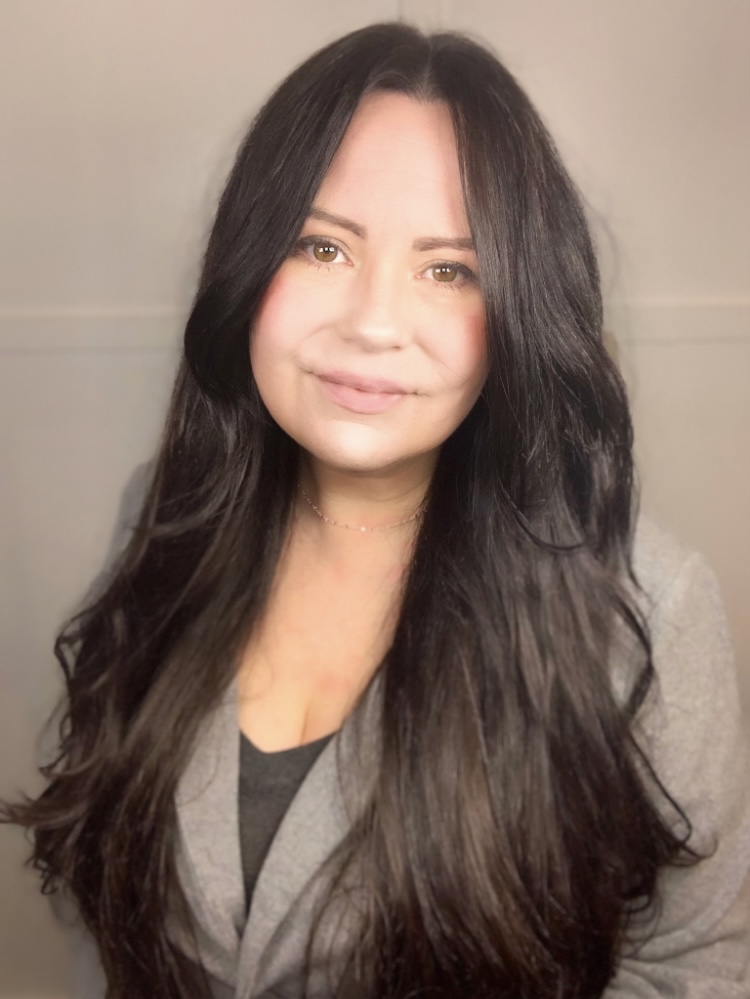
Cyndii Sinex, MPH is a public health practitioner and the founder of the Chronic Illness Hotline, a text-based peer support line for people navigating chronic illness, pain, injury, disability, and neurodivergence. She combines professional expertise with personal experience to create a space where people feel seen, heard, and supported. The Hotline is currently accepting donations to be the first free, confidential, 24/7 peer support line of its kind, creating space for people to process the ups, the downs, and everything in between - with or without diagnosis & self diagnosis valid. Give today at chronicillnesshotline.org
Cyndii's mission is deeply personal, shaped by years of being misdiagnosed, dismissed, and learning how powerful it can be just to be believed.