Disability-Inclusive Hiring: The Business Case for Inclusion with Gene Boes
What becomes possible when employers stop making assumptions about disability and start asking what people can do?
In this episode of Changing Minds & Changing Lives, Julie Sowash talks with Gene Boes, CEO of Northwest Center, about his deeply personal connection to disability, his transition from Microsoft and the corporate world to nonprofit leadership, and why disability inclusion should be approached as a business strategy.
Gene Boes shares how Northwest Center works with employers to match ability with business need, challenge assumptions about accommodations and disabled talent, and create workplaces where more people can succeed. He also explains his ask of employers to “suspend disbelief”, encouraging leaders to be curious and move from assumptions about what cannot be done toward asking what might be possible. The conversation explores the history of disability inclusion as a civil rights issue, the business impact of inclusive employment, and why changing workplace mindsets can help employers address real challenges including retention, absenteeism, productivity, quality, and safety.
In This Episode:
- How personal experience shaped Gene Boes’ approach to disability inclusion.
- Why disability-inclusive hiring is a business strategy.
- Challenging assumptions about disabled talent and accommodations.
- How inclusion can improve productivity, quality, and workforce outcomes.
- Why employers should “suspend disbelief.”
Resources & Links:
- Northwest Center – Learn about Northwest Center’s work advancing disability inclusion in education, employment, and communities.
Changing Minds & Changing Lives
Nov. 17, 2026
Julie Sowash
Welcome back to Changing Minds, Changing Lives, my friends. I am Julie Sowash, co-founder and strategic advisor to Disability Solutions and, as always, your humble host today. As we enter the last days of 2026, I want to ask you guys all for a big favor. If you like the podcast, will you please just take 30 seconds and hit the Subscribe button or the Like button on YouTube, wherever you listen. Your Like and your view, if you feel so inclined, helps ensure our podcast gets seen more by the algorithm and that we continue to grow our audience and those who are also with us, committed to learning and changing the lives of people with disabilities every single day. So take 10 seconds. Hit the Like. Hit the Subscribe. I would love a review as long as you love me. But no, seriously, guys, thank you so much for all the support we've had in 2026 and just that little piece of action will make the impact all that much larger. So thank you. Today we have a great guest, someone I've been waiting to talk to for the last few weeks. Our guest today is Gene Boes. He is the CEO of the Northwest Center. Gene spent 14 years at Microsoft and has a career that spans the military, consulting, education and nonprofit leadership. He also brings a deeply personal connection to disability that shaped the work he does today. Gene, welcome to the show.
Gene Boes
Thank you so much for having me. I really, really appreciate the opportunity.
Julie Sowash
Yeah, no, thank you. So, you know, tell us your commitment to disability comes from several personal places. Can you share some of your family's story and how those experiences have shaped the leader that you've become at Northwest today?
Gene Boes
For me, the, again, the commitment to inclusion’s personal and it's, I have several components of my why in all this. It starts with my daughter. She's 33 now. She's on the severe end of the autism spectrum, has, she's pretty complicated, she's got a seizure disorder. She has OCD. She has been excluded her entire life. And so I have lived her life through the eyes of a parent. And for me, the world is wholly unacceptable the way it is. It needs to change for her and for us. So Tori is largely my why. I had a father who was incredibly able and then had late-onset multiple sclerosis. So he got diagnosed when I was a sophomore in high school, and I saw how the world treated him when he was able and how the world abandoned him when he was disabled. I also had a cousin growing up. Joey was a couple years older than me, who had Down syndrome. And I grew up in the 70s. And you didn't see disability back then. But my aunt, who's a role model for me and my cousin, she didn't hide him. He was out in public. Very different than most. But just growing up with him and experiencing him had a big influence on my life. So for me, the inclusion component and the personal commitment wasn't a moment in time where I became committed to this. This was based on a life experience for me to be able to process all of those things that have happened in my life to bring me to this point now where I am incredibly committed to changing the world, not because we need to fix people with disabilities. They're not broken. It's the rest of us. We really, if we really want the world we all deserve, we just we need to think about the world differently and stop excluding people and begin to truly include people.
Julie Sowash
Yeah, yeah. I mean, I say it's, I have a, and you guys have probably heard me say this a couple of times this year already, but living in Europe now, it is incredible how frequently I see and engage with people with disabilities in our community. Or watch British television and there are people with disabilities on British television everywhere. And it's so much more. It feels so much more common here. Are the systems perfect? Are the processes perfect? Are the people perfect? No, but there is a substantial difference in how we see people with disability in Europe versus how we see people with disabilities in America, and in that we do not see us very often. So I think that's such an excellent point, you know, and I guess, you know, you started at or maybe not started, but you were at Microsoft for a long time, so you were one of those big corporate guys doing the corporate thing. And then now you've moved into nonprofit management, which is an entirely different world. How kind of have the experiences with your family specifically, probably mostly your daughter, and your experience as a business leader influenced the way that you talk to other business leaders now about disability?
Gene Boes
When you called out the transition I made, I didn’t have a nonprofit background. I had a military and a corporate background. And then, took over the reins of Northwest Center. And I think when I, the first thing I like to share is when I took over the CEO role, my friends in the for-profit arena, and, “Ooh, you're going to the nonprofit arena.” And I was like, “I am. Well, why is that different?” And I think just to the shorter version of this is, listen, nonprofit’s a tax status, ok? You're gonna either be excellent or you're not. And that's what I've tried to introduce into the organization since I started, was we need to be committed to excellence. I need you to stop thinking or coming from this place of frugality or lack. I expect great things. I expect to give you the tools to deliver those great things. I work for you. You don't work for me. Here's what we’re gonna accomplish. I need you to tell me what you need. And I need to go get what you need to go do this. So I think from a mindset perspective, I wanted to start with that and as I made this transition over. But when I talk to business leaders, I think I bring credibility because I've been in their shoes. I'm not this non-profit person that's coming in and pitching something that I think they need versus I know what you need. You need business solutions. And so for Northwest Center, part of our secret sauce, at least in the employment arena, is we match ability with need. And what it requires is you need to know what that employer needs, not what you think they need. So you need to understand what their need is. And you need to solve their business problem by providing them talent that they don't have access to. I would argue extraordinary talent, that they don't have access to, which also is a mindset shift. People with disabilities, they think of disability as not able. Quite frankly, they're able and often more able. You need just to create this pathway to get that talent into your organization and unleash it to again, it's about solving business problems from an employment perspective. It's not about charity. It's not about social responsibility. It's not about even how people think of DE&I in a traditional sense. It's not that. It’s solving business problems. And if you come from that mindset, then I think everybody wins in that scenario.
Julie Sowash
Yeah, I really appreciate that. I think one thing that has always frustrated me with some time in a nonprofit background and a lot of time in the business world is how differently nonprofits think about the world.
And there is, I understand that, but when you start to treat your nonprofit like the business that it is, that's outcomes driven, that’s not charity focused in the way that it thinks about doing business, it's incredibly powerful.
Because it empowers your employees to think about their roles differently, about their ability to impact, it thinks about the people that they work with, that they’re, you know, they're serving and supporting in a different way. I really, really admire that.
You know, and tell me a little bit, I guess, more about Northwest Center overall. Obviously the organization’s been around for 50+ years. Walk me through kind of the approach.
Gene Boes
Now, that’s great. And I think for me, the I described the mindset I had, that nonprofit is a, it's a tax status. I think that goes back to our founding mothers, as I tell the story and the legacy that I was chartered with carrying forward from them and honoring.
The Northwest Center was started by four moms in 1965. And they were told, “Hey, your children don't belong in school or church or the community. You should put them in institutions.” And those four moms rightly stood up and said, “You know what?
Our children could be contributing citizens if they're given the opportunity that they have a right to receive.” And so we were started as a civil rights organization. So those four moms started Northwest Center, started teaching their kids.
And, you know, a couple years in, they took stock of their progress. And sure enough, their kids were advancing and growing because they were given the opportunity. But those moms looked around the community and said, “Wow, it's great that our children have this opportunity, but there's so many kids that aren't getting this opportunity.
Not ok. We’re gonna do something about it.” So they grabbed a couple law interns from the University of Washington, and they helped writeHouse Bill 90 Washington Education for All, first law of its kind in the country, that said all children, including those with disabilities, have the right to an education. And then that law was then taken to D.C. and used as a blueprint for what's IDEA today, Individuals with Disabilities Education Act. So those four moms with the courage to act impact every zip code. So that's an enormous legacy to continue certainly for Northwest Center today as you fast forward. I think part of and I did have the blessing of being able to work with two of those founding mothers after I started as CEO and, you know, wanted to understand how they approached the world and what they wanted out of Northwest Center, as I, you know, try, again, try to honor their legacy, But also to understand the journey that they were on and all the things that it took to do what they did and the unrealized vision for those founding moms was equitable access. So they got access to education. But it's not equitable today. And it's not just about access to education. It's about access to employment, access to the community, access to housing, access to transportation. So there's still a lot of work to do. But that start from those founding mothers was really, one, extraordinary what they accomplished. And for me, it was a jumping off point when I started as CEO to really land with the organization. This idea of one, you're doing extraordinary work. I'm not saying you're not. But I'm gonna tell you it's not enough. So I need you to really understand what we're going to do together. And there is no rest in all of this until we get to the world we need to. So for me, that was taking the legacy that our founding mothers started, honoring that moving us forward. And just as a bridging point, when I started, we were operating in four counties in one state, in Washington state. We are now driving impact in 50 states and 27 countries. And that is the vision. I'll take some credit for the vision, but that is it. That is a thousand employees at Northwest Center that are inclusion ambassadors, that have a growth mindset, that have an understanding that the vision of creating the world we all deserve is achievable. As enormous as that goal is, what we do matters every day and we need to do more. And it's that, again, it's that, inclusion ambassadors, again, across 11 different enterprises that do extraordinary work every day, but know that it's not enough. Because families are still in crisis. And that's kind of the unifying construct that I try to use is, like, look, I know how hard this is. You're doing enormous, enormously hard work. But here's what's at stake. And I think from the mission perspective, it's I find it more compelling and more motivating to be working for a nonprofit that has the mission that we have versus a for-profit that's trying to drive, you know, shareholder value. So, you know, again mindset. You change mindsets and what’s possible is just extraordinary.
Julie Sowash
Yeah, that's an incredible story. I always love an opportunity to get a little civil rights education for our community. I think that is so powerful. And as a community, we don't know enough about it. So thank you for sharing that and thanks to the moms. That's incredible work. So tell me a little bit more about the expansion. When you think of going from you said four counties and one state. What does expansion look like in terms of services and solutions that you guys are providing now globally in a, it seems like a pretty quick time frame.
Gene Boes
Ok, great. So of the 11 enterprises, many of them are commercial enterprises if you think of them that way. And we have expanded into multiple states, in large part with our partnership with Amazon. So we are operating commercially in multiple states. But more importantly, I'll pivot back to what I would describe as our programs. The mission component is how we've talked about it in the past. Everything we do at Northwest Center is mission driven. So of the 1000 employees, between 300 and 400 of them have a declared disability. So we are showing that you win because of inclusion, not in spite of it. But from a program perspective, we do direct services. And just if I can really briefly describe the strategic plan, it's ditto. It's we do directly. We innovate and improve. We teach others and we tell others. The tell others is the advocacy. The teach others is honestly how we're getting so much more leverage than the direct services. So the direct services we do, again, cradle through career give us credibility. And for me, it's if you're not doing it yourself, I was a consultant. That's part of my career path. And as a consultant, it's really difficult to have credibility. Telling somebody to do something that you don't really do yourself. So we do and we innovate and improve because the services we do provide are great, but they're not enough. So they need to be improved. We also need to innovate, create services that don't exist. That's all part of the do. We serve roughly 1000 kids and roughly 1000 adults in those direct services. But the teaching others is the biggest component. So our impact program, which is a mouthful, its Inclusion Mentorship Program for Increasing Access to Childcare Team. And that comes from our early learning and early supports teams. So early supports are therapists that provide therapy from birth to age 3 for any developmental delay a child might have, our inclusive early learning, our inclusive classrooms, where 35% to 40% of the students have a disability and the balance are typically developing, so it truly is inclusive. My predecessor went to that group and said, “How many more schools do we need to build?” And they said, “None. Don't build any schools. We can't build enough schools to do what we need to do. We need to teach others how to do this so that kids get.” This was so foreign to me when I started. Children get evicted from preschool. Like, wow, I couldn't even get my head around that. But because the staff don't understand how to manage behaviors and environment, those kids would get evicted and then put on our waiting list to get into one of our schools where we have just one school now. And our team said, “You know, we just need to teach those organizations how to serve kids with disabilities.” So we started the Impact Program. Think of it as consulting for early learning organizations, where we train and work with them to help them create inclusive environments. And oversimplified, so much about the disability situation with kids or kids that need accommodation is about managing the environment. So don't let the escalation happen. If you let the escalation happen, then ok, now that's really difficult to deal with, but if you know how to manage an environment, you eliminate the escalations and the behaviors and you're able to serve more students and more kids. So we created that. That is a large component of how we're in 50 states and 27 countries. So we are able to, you know, remote learning, you know, LMS online training, but then also availability to our team for consulting. So that is truly working. We've reached over, last year, we reached over 56,000 kids through that program. So that’s clearly our leverage point in the model we have. We'll do direct services, but we teach others and that's how we drive impact as greatly as we can. The equivalent to that, which is a couple years behind in terms of development, is our Employment Transformation Collective. But honestly, think of it the same way. It's consulting for employers to teach them how to create a more inclusive environment. First of all, to get more out of the potential of their current employees. So we really believe and we have the data that shows that if you are more inclusive, you get more out of your current workforce. And for me, it's important because to honor our clients when we place them in employment, I want them in an environment where they can bring their best self to work and be successful. And to honor them isn't to take all the work that no one wants to do and give that to someone with a disability. It's to say, “No, we're gonna create an environment that's accessible, that you can actually get to work, that you don't have to spend as much energy to be at work because it's accessible.” There's a culture and a mindset that's more appropriate for everyone to bring their best self to work. And then as we place people in those environments, again, everybody wins. You get this return on inclusion that we want. So for us, the biggest lever for change is teaching others how to do what we do cradle through career.
Julie Sowash
Oh, that’s great. So you recently joined Ashley on Disability @ Work, her podcast, where you talked about a phrase that really kind of, I think, captures your approach with employers. And it's “suspend disbelief.” And I'd love to just dig into that a little bit deeper. What are you asking employers to suspend disbelief about?
Gene Boes
So that's great. So kind of the preceding the conversation with employers was actually with our own staff. It's this idea of suspend disbelief and be curious. So don't think, “I can't do that.” Think, “How am I gonna do that?” Be curious. Like, don't think that anything's impossible. And I'll say right up front. As a parent of a child with disability, I put my own daughter in a box. So this is something I have to practice what I preach every day with my own daughter. It's this idea of, like, I can't keep thinking about what my daughter can't do. I need to think about how to unlock her and how to allow her to do those things. So the first step was really with the staff to get them to buy in. And that's how we changed the mindset at Northwest Center to have a growth mindset and to understand that that's how we're going to do what's needed is to have that mindset. Now with employers to have that conversation, that’s, for me, it’s the, coming from a business background and approaching it from a business value perspective. You know, when I go to an employer, I'll talk about, the things that most employers struggle with: attrition, absenteeism, productivity, quality, safety. I would love to help you solve those business problems. I believe we can do it with a more inclusive workforce. What I need you to do is suspend disbelief on anything that you might have in terms of doubt or obstacle and just be curious. So I'm not asking you to believe in anything that I can't defend with data and objectivity, but I'm asking you just to suspend disbelief for a minute and consider what's possible. Just be curious. And that allows me then to take the data that we have. We prove it every day at Northwest Center in our businesses. Our partner employers, we prove it every day with them. Those employers that have bought into this idea of return on inclusion and the benefit of being inclusive. So we have the business case to do that. So that's largely what it starts with, that suspend disbelief. I think I'll go back to myself and talk about scenarios for me. Like, I find myself not even tethered to my daughter or in that arena, but I find myself, you know, we all deal with self-doubt. So when you get into the situation with a lot of this is, I'm really not sure how we're gonna solve this. And instead of, you know, being depressed or negative or like, “Oh, this is never gonna work.” It’s more, “Hm, follow my own guidance.” It’s like, “Suspend disbelief. Ok, what would I like this to look like? And then how? How would I make that possible?” And, like, all things aren't necessarily possible, but it's just that mindset shift from, “It can't be done,” to “How might it be done?” And I think with that, if you're curious and you spend the right amount of time thinking about it, I find, I think, we find, that it's less difficult than we might have thought.
Julie Sowash
It's not rocket science. I always love to tell employers when we work with them, “This is not rocket science. We can find you great talent. And we can make sure that they're meeting your business needs and having a great opportunity on top of it.” So, you know, when you're working with employers now, what are some of the assumptions that you guys run into about disabled talent kind of most frequently?
Gene Boes
I do think a lot of it's around accommodation and a lot of it's, again, about mindset. “Well, they're disabled so they're not able.” Well, I think that's part of the, for me, the suspend disbelief part. So let me give, let me give an example. And this didn't require an expensive accommodation. And I think that's also part of this. So there's this fear of accommodation because it's an unknown. It must be really expensive. And accommodation, quite honestly, doesn't just serve the individual. It often serves the whole workforce. So this idea of thinking about things a little bit differently. But I think the first part of this is employers will think it's gonna be harder than not. And they don't really understand ability versus disability. So they have this stigma that they attach that, “Well, they're not as able.” So let me tell you a Northwest Center story from one of our employees. And at the time, we had an assembly and packaging business, which we've since shuttered. But this individual came to us from their parent. He was 18 years old. His name was Chance. And the storyline was, basically, “He can't do anything. He's not capable of anything. And he can't sit around at home all day. I'm not sure what to do with him. Like, can you help us?” And so, Northwest Center stepped in and said, “Ok.” The team met with Chance, talked with them a little bit, got to know him better. Before we placed him, I'd want to emphasize this, that part of our process is to get to know our clients. It's really person-centered planning. You know, we're not for our employment clients. It's not about, “What job do you want?” That's not where the conversation starts. Who are you as a person? What are your likes? What are your dislikes? What are your aspirations? Now one of the challenges and it goes to Chance and his story is, often for us, is to get our clients to have enough self-confidence to believe they can do the work. So not only do they not realize that they have ability, they've been told no their whole life. So part of this mindset shift is even with our clients. It’s like, “No you are incredibly capable, despite what the world has told you. So let's figure out. Stay on the journey with us. Let's figure out what your skills are and we'll find the right role for you that you can come to life in.” So Chance came to us kind of with that, like, they can't do anything, 18 years old, can't sit around at home. What are we gonna do? To shorten the story, fast forward, one of Chance’s challenges was Obsessive Compulsive Disorder. And I'll say from experience, because my daughter has Obsessive Compulsive Disorder, it can be extraordinarily challenging. So in your mindset, you could frame it as, “Wow, that is debilitating.” If you're a business person, you can say, “Wow, that's a superpower.” So think of quality assurance, attention to detail, you know, steps that have to be taken over and over and over again. Repetitive steps. One of our customers in that assembly and packaging business at the time was Starbucks. And what Northwest Center did for Starbucks was we assembled their holiday packets that went into their stores. So if you go in and buy a packet that had a mug, some coffee beans, some chocolate, whatever it might be, we were the ones that assembled that for Starbucks. Chance was put in charge of quality assurance for that line of business. And with Chance’s oversight in all of that to the course of a couple years, he quality checked over 2 million units
Julie Sowash
Oh my.
Gene Boes
in that time. So if you want to talk about failure rates, then and this is how we define failure. Failure rate for any of those products would be if someone returned one of those items to the store. Of 2 million plus units checked, no returns.
Julie Sowash
No way.
Gene Boes
His failure rate was zero. You can't automate that. Ok, so here’s someone who can’t do anything, the parents are at wit's end, we need to have something to do for him to QA. And he did that. That is extraordinary business value and all of that. And that with Chance I want to also talk about an outcome here that I love the best in all of this is when through this journey, the Chance was on with us in all of this, he had decided he wanted to be a plumber. Without our help, he created his own resume and landed a plumber apprenticeship and left Northwest Center. And for me, that is the best attrition I can imagine in anything. Here’s someone who came with this idea of, like, “I can't do anything. I have no business value,” to, “I’m mastering my own destiny. Because I believe in myself, I'm gonna go do what I want to do.” So for me, that's a long story. But what it requires, there was no accommodation that we needed other than to suspend disbelief and ask ourselves, “What’s possible with this individual?” And then turn him loose, which we did. And, again, the, as a business person, I don't know where you could find a quality execution like that anywhere.
Julie Sowash
Yeah, I can’t tell you one. And I mean, that's what we live for, right? We do the work and we understand that we can’t always see the scale of it, right? When you're talking about your teaching and that you can't see every life that you touch. You know that there's that ripple effect of it and you know that you're making an impact. But when you get to have those personal stories, they, for me at least, they would carry me through the very tough times. So thank you for sharing that with us. So last question, as we kind of round up. If an employer is listening today, we know that you guys are, and you're intrigued but still skeptical. What would you, Gene, tell them to do first? Kind of like, what does suspending disbelief look like in practice tomorrow morning?
Gene Boes
Well, in practice it's be willing to have the conversation. So the if you don't open up a communication with somebody like Northwest Center or with your own staff, etc. I think the first step in suspending disbelief is to be willing to have a conversation. I think I’d encourage any employer do not go through this alone. I think that's something else I would encourage. Don't feel like you have to do this yourself. I would, as the consultant in me would say, don't do it yourself, because we've made so much progress in figuring out how to do this well. We are still learning. We're still on our own journey, but we know so much about how to approach this that I would, again, encourage employers to consider and open a dialogue. It's that, it’s that. That is simply the first step. And for me, changing the mindset is that. Suspend disbelief about having that conversation. Just open a dialogue and then allow it to go where it goes. And you know that, for me, how hard is that, right? It's like, make time for a cup of coffee with someone and have a conversation. That's my ask.
Julie Sowash
Yeah, and don't be scared. Ask the hard questions. Ask the things that you need to ask to get over your analysis paralysis to take that first step. Mr. Gene Boes, thank you so much for joining us today. I love this conversation. I love the passion that you bring. It's always incredible to meet another human that wants to change minds and change lives. Have a wonderful holiday season and you guys too. Hit Like, Subscribe, Review and we'll see you next month. See you. Bye.
President & CEO
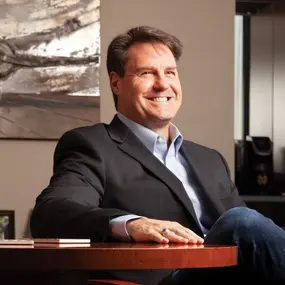
Gene Boes joined Northwest Center as CEO in 2017, after serving on the Northwest Center Board of Directors for three years. Previously, Boes was a management consultant serving as Principal for the Seattle office of the North Highland Company. In addition to his consulting duties, Gene also served as an Adjunct Professor at Seattle Pacific University and Seattle University, and is a Mentor for the Albers School of Business. Prior to joining North Highland, he was Managing Director at Loft9 Consulting, a Bellevue-based Management Consulting Firm. His career also includes nearly 14 years at Microsoft, two years with Deloitte Consulting, and nine years serving in the US Navy.