Rethinking Disability Hiring: Bias, Barriers, and AI — with Myles Wallace of Peak Performers
In this episode of Changing Minds & Changing Lives, host Julie Sowash sits down with Myles Wallace, Disability Inclusion Partner at Peak Performers, to unpack what disability hiring really looks like in 2026. From outdated job descriptions and biased resume screening to interviews that unintentionally exclude neurodivergent and disabled candidates, Myles shares where employers continue to get it wrong—and what meaningful inclusion actually requires.
The conversation also dives into the growing role of AI in hiring, exploring both its promise as an accessibility tool and its risks when bias is automated at scale. Drawing on lived experience, employer advising, and years in disability staffing, Myles offers practical insight for organizations that want to move beyond performative inclusion and build hiring processes that work for people.
Key Takeaways
- Myles Wallace’s disability and career journey—and how lived experience shapes inclusive hiring
- What Peak Performers does and how revenue‑funded disability staffing works
- Why disability unemployment remains stubbornly high despite years of “progress”
- Where employers unintentionally exclude disabled candidates before interviews even begin
- How job descriptions, resume gaps, and “job hopping” bias limit access to opportunity
- Why traditional interviews often disadvantage neurodivergent and disabled professionals
- Practical, low‑cost interview accommodations employers can implement today
- The real impact of AI screening tools on candidates with disabilities
- Where AI can improve access—and where it risks reinforcing discrimination
- Why human accountability still matters in automated hiring systems
- What employers must do now to build inclusive, future‑ready hiring processes
About the Guest
Myles Wallace, Disability Inclusion Partner, Peak Performers
About the Host
Julie Sowash
Learn more about Peak Performers and available roles at: peakperformers.org
Julie Sowash
Welcome back to Changing Minds and Changing Lives. I'm Julie Sowash and today I am joined by Myles Wallace, a disability inclusion partner at Peak Performers, a staffing agency built around a simple but some would say still radical idea that professionals with disabilities deserve the same access to real employment as everyone else, and that employers need actual guidance to make that happen. Myles rose through the ranks at Peak Performers as a recruiter before moving into his current role, advising employers on disability hiring and inclusive talent strategy. He also hosts two video series, that’s a lot, for Peak Performers: My Disability Story and Disability Idea, where he spent a lot of time listening to both candidates and employers talk about what's actually working and what isn't. Today we’re gonna get into all of that, what disability hiring looks like in 2026, where the industry has moved, where we're stuck, maybe some specific places he thinks employers are still getting it wrong or perhaps getting it right. And because I can't help myself, we’re gonna talk a little bit about AI. The ways it's reshaping hiring for candidates with disabilities, what it's breaking, and where it might actually be helpful. So before we do all that, Myles, welcome to Changing Minds, Changing Lives.
Myles Wallace
Well thank you so much for having me, Julie. It's a pleasure to be here.
Julie Sowash
Thanks. So how did I do on that intro? Anything else I got? Anything I got wrong? Anything else you want to add?
Myles Wallace
You did great, Julie. Yeah, disability inclusion is really something that is a passion point for me. And I will tell you that if you're looking for a compliance person or a legal expert, I'm not your guy. But if you're looking for somebody that is an expert on inclusion and building a disability inclusive culture, I'm a person that I hope that you would trust with being able to help build that culture. And here's the other thing that many companies miss in this process. The unemployment rate here in the states, consistently for people with disabilities is double that of the national average. And what Peak Performers has found is that when you hire people with disabilities, you're tapping into a largely untapped labor pool of people that are eager to work and are going to stick around with your organization even longer than the average bear.
Julie Sowash
Absolutely. So, you're obviously passionate about our community, about this work, about Peak Performers. Tell me, I saw you worked at Apple before, and you've had a couple of different roles prior to that. What drew you to disability employment and what ultimately brought you to Peak Performers?
Myles Wallace
So I, like many people, I have kind of floated around between many different careers. And let me back that up. I'll tell you the other side of the story: my wife. My wife is a youth librarian, and she's known what she's wanted to do since she was basically 14 years old. And if it were a recruitment kind of situation and I was recruiting for a youth librarian, she's always going to be the first person that I call, because her resume is so straightforward. But I think most of us probably have a little bit more of a circuitous path than that, including me. I got my first job, outside of college into the 2009 recession, and it was a bear. And I remember that I had a horrible job as an email marketer. My job was to send out hundreds of thousands of spam emails every single day. Don't hate me forever. I hated the job too. But that was my job. I worked in a small, windowless office, and, you know, one day I had to kind of learn a little bit more about myself and my own strengths, and particularly what I was not good at, as well as kind of, like, take a step back and really, try to work on myself a little bit, too. Suffice to say that one day I accidentally sent out the wrong spam email to quarter of a million people and lost my job that day. But this kind of set me off on a journey of discovery with being able to learn a little bit more about myself, I went on to found my own business, which was also unsuccessful. Because again, 2009, in Ohio and just not a great time and place to be starting a business. But I tried selling reputation management services for small businesses there. And then I finally kind of got my foot in the door, first working in a board, a board game and toy store and then finally over in Apple. But still, even at Apple, I struggled for many, many years to be able to advance to that full-time rank. And for many years, I struggled with my sense of self-worth and being able to say, look, I'm meant for something more. I'm meant to have a larger impact. And I oftentimes credit the people in our lives that oftentimes have unsung impacts on us. Because I had a conversation with my manager one day in our quarterly one on one. And I said, I think I'm just kind of a line worker. Like, I think I'm just kind of like here to show up to do my thing and stuff. And he says, Myles, you are meant for so much more. And that was something that really I needed to hear. Because while disability is something that more subtly impacts my daily life, it is something that is impactful for me. I live with profound hearing loss. And this can be especially challenging if you've ever been in an Apple store where it seems like everybody is screaming all the time and people are packed in shoulder to shoulder. But like many people with disabilities, we figure it out. We figure out how to self-accommodate, and in my case, I learned many different strategies about being able to read body language very closely, being able to stand a little bit closer to people and being able to maneuver in such a way so that I can hear people and can understand their meaning. And ultimately, what many people will find with their disability is that it's actually kind of a unique hidden asset within them as well. What I found working in sales, that eventually led me to B2B sales, was that I was a lot faster at building quick customer rapport, even in crowded and chaotic environments where many other people might struggle. And this allowed me to advance within the ranks. So I worked for Apple for about six and a half years before getting recruited over to Peak Performers. I went over to IT recruitment. And then I found my way over to doing, again, B2B but I spent most of my days responding to what are called requests for proposals or RFPs for large government agencies. It's a lot of paperwork. I wouldn't recommend it necessarily. At least if you are a people person like me. But it was ultimately working at Peak Performers when we were kind of at a bit of a cultural low moment that I started doing our disability moments, as we called them, at our weekly staff meetings to kind of help remind people, why are we here? And this is the impact that we're making every single day on the lives of people with disabilities. Because it's so easy when we work within the nonprofit space to forget about that profound impact that we're having, but we are extending opportunities to people. We're extending the ladder like we are helping people get their foot in the door, and we're helping people overcome barriers. And that's a tremendous story to tell. So I started doing these weekly staff moments, and then eventually we realized that there was a greater need to have the subject matter expert on staff and somebody that can help lead a lot of the community outreach and marketing efforts. And eventually my role crafted into being able to help advise businesses. And that's what really excites me right now is talking with air quotes here, the “disability curious” among us, the people that maybe they have a close friend or family member but haven't really thought about accommodations. They don't really have a full scope of understanding about what it means to live and work with a disability, but they want to do the right thing. They want to help people. They just don't know how yet. So my job is to build a bridge and help get those people over that bridge so that they can at least understand our perspective. And I think that the other advantage that I have over many other people within this space is that I got tired a long time ago of telling just my own story, because my own story is just that of hearing loss, as well as recently diagnosed with sleep apnea as well. The latter doesn't really necessarily affect my job, too much in the way that hearing loss does. But what I found was that my real passion was being able to interview and absorb the stories of other people and help amplify that. So in any given situation, I'm usually running it through the filter of about 5-6 different disabilities and lived experiences. How would this person perceive this? What kind of barriers are they facing? And how is this having a subtle impact that's helped me grow as a person. It's helped me be able to advise businesses better because disability inclusion is in many ways it’s simple, right? Like, we want to do the right thing, we want to do the human thing, we want to support people. But at the same time, there is a lot of complexity to it as well.
Julie Sowash
Mmm-hmm. There is, absolutely. Well, thank you for sharing your story and talking about your career journey. I think that's so important for, not just listeners with disabilities, but all of us to hear, you know, that it's not a straight path. And for very few of us, unlike your wife, it is never a straight path. So for listeners who don't know about Peak Performers, walk us through what the agency actually does and who you're serving on kind of both sides of the equation.
Myles Wallace
Of course. So we are a staffing agency that is a nonprofit. We're also rather unusual in that we are what's called a revenue-funded nonprofit agency. In other words, we don't get any government grants or we don't take any charitable contributions. We strictly operate as much as another staffing agency would in that we make our money, pardon the coarse word here, right? But we make our money as a nonprofit in putting people to work. And in that way, many of us actually look at our goals very much like a for-profit corporation would in that the more we can grow the business, the more that we can put people to work. And that's really what it matters to me, as well as to the other people within the organization. Because if you ask any person on the street how they identify, most of them are probably going to say based off of their J-O-B, their job. That's really how so much of us identify. And people with disabilities experience so many subtle and overt barriers to being able to get employed and stay employed, and even rise among the ranks once they get into an organization. And Peak Performers was founded 31 years ago to help overcome those barriers. Our primary businesses is temporary staffing. So the way that that works is that we recruit individuals. We give priority consideration to all those who have disabilities. However, all of those with disabilities are working in a competitive environment and competing for the job. And the person that is both best qualified as well as interviews the best, shows up the best on paper, etc., etc. They’re gonna be the person that the client ultimately selects, and then we're there to help not only pay that individual, but also support them with ongoing benefits needs, as well as help be able to negotiate accommodations because Julie, sometimes it can be really awkward. Many people have never requested an accommodation before, or many people have requested an accommodation previously and just been denied by their employer. And many people don't even realize that various different health conditions may qualify for a disability ADA accommodation. And they need some help with being able to navigate that process without necessarily outing themselves. So that's where Peak Performers steps in is support all along the way. We seek to understand and get to know all of the people, support them with ongoing accommodation needs. And at the end of the day, we hope that our clients hire them on full time. That is the end vision for us is we realize that temporary staffing is maybe not people's first choice as far as employment goes. We hope to be a productive stepping stone towards that full-time employment. However, I will point out to you that there are many individuals that work with us that have worked with us for a very long period of time, even longer than I've been here at Peak Performers of eight and a half years. We have some people that have been working, again, air quotes here, “temporarily” for 10+ years within our organization. And again, their disability needs change over time. Their combination needs change over time. But at the end of the day, it's human needs. And that's really what Peak Performers is all about, supporting human needs that people have to be able to make sure that they can stay working in a productive manner that compliments their God-given skills.
Julie Sowash
So let's talk about disability hiring a bit. So you and I were kinda joking around. We've been in the space for a while. I think I'm a little bit older than you, but that's okay. When you look at kind of disability hiring now versus five years ago or ten years ago, what do you feel like’s genuinely changed? And what's kind of still stuck in the same place as when you started?
Myles Wallace
I think that we are making progress, particularly around a couple of key areas. I think that neurodiversity within the workplace is improving. By the way, happy Autism Awareness Month this April. This is a great time to celebrate all of your friends who have autism within the workplace and to acknowledge the value that they bring. I think that we are making a lot of progress, but there's still so much work to go. Taking autism as an example, many companies might be celebrating their autism programs, but they might not necessarily be making substantive changes to ensure that people with autism can be themselves without having to mask heavily. Masking, by the way, is a term that's used to describe it when somebody assumes a identity or a personality in order to fit in within the larger ecosystem within your workplace. So I think that this brings up some really interesting questions of like, how are we supporting these individuals and how are we going past just the banner on social media, that says we are an autism-friendly employer? I think that the same can be true of mental health. I think that we are making so much progress around mental health awareness within the workplace, and many more people feel comfortable coming out to their boss and saying, look, I have depression or I have anxiety disorder, but I think that there still is a lot of work to do there as well, because there are certain areas that are just frankly, taboo. While many people can talk about depression or anxiety disorders that they experience and ask for an accommodation, I think it's a totally different experience if you come to your boss and you say, look, I experience schizophrenia, right? Like any kind of thing, that is, again, air quotes here, “crazy,” like, that is something that is still very much stigmatized. And I think that we have a lot of work to do to understand that to be a, to support mental health means to support all mental health, not just some. We can't pick and choose exactly what mental health we want to support. We have to support all of it. So this kind of brings us to talking a little bit more about what needs to change, right? And I think that the unemployment rate for people with disabilities is roughly double that of the national average. And to be honest, Julie, that hasn't budged like over the last several decades, since they started measuring it, it largely has not moved. It bumped up slightly during the COVID-19 pandemic. And that was because so many people had access to remote work opportunities. But besides that, it really has not changed. And I think that that is a tremendous call to action, because when things don't change, that means we need to do things differently. We have to look at the way that things are structured right now, the barriers that people face. And we have to make the change within our organizations so that more people with disabilities can feel comfortable through the entire process.
And I'm gonna break that down for you. There are really kind of three primary areas that if you are a business, you should be focused on right now to try to make sure that you're removing barriers and including more people with disabilities. And those break down into, first off, your job descriptions. Second off, is your screening of all applicants. And then third is the actual in-person interviews. When you talk about job descriptions, I think that the biggest thing that employers need to be aware of is that if you are copy pasting from job description to job description, you are likely having ableist holdovers that are in there that are unfairly excluding people. So, for example, if you have, “Must be able to lift 50 lbs,” that, again, you have to look at the essential functions of the job and say, “Does Julie need to actually be able to lift 50 lbs to be able to do the essential functions of this job?” If not, let's take it out. You also have to look at things like driving requirements, right? So, “Must have a valid driver's license.” Ok, so is the person driving for part of their job or is the expectation that they just show up every day, right? Like, ask yourself these essential questions because by not, by having that kind of thing in there, that means that you're automatically screening out so many people with, for example, epilepsy or seizure disorder that might not legally be allowed to drive. You know, these are very subtle things, but they have impacts on people. And the more that you add them up, all these parts and pieces continually shut out so many different people within a large swath of the population. However, I think that the vast majority of the time what we find is that, the majority of candidates get screened out in that middle step. And that is, imagine if you're the hiring manager for a second here with me. You have a stack of resumes sitting on top of your desk. And you're going, no, no, yes. Or maybe, no, no. You're going through the stack of resumes Increasingly in a digital platform called an applicant tracking system. It's those split-second decisions that we're making that have an impact on who gets the interview, who even gets the opportunity and who does not.
And there are many different patterns, but I'll tell you about three of them that I see from my spot in a recruiting agency. The first one, if you want to try to be more inclusive towards people with various different chronic health conditions, you need to be thinking about your preconceptions and your biases about people with resumé gaps. Resumé gaps happen for a variety of valid life reasons. And just because somebody has a resume gap or six months, two years, three years, right? You know, you should not be unfairly excluding them. Now, it is valuable to ask yourself the question of, I hear often that recruiters say, well, how do I know that they kept their skills sharp? You need to go back to the job description and say, is this a high-tech role that requires them to be up-to-date on all the latest of the jobs, in which case that might be a reasonable screening measure that you can be taking. But I think for the most part, probably not. Like most of us don't need to be up to date. And let's be honest, Julie, most of us are probably gonna get some level of training anyway. But I've been told by multiple people, with cancer diagnoses that they're like, “Hey, look, Myles, I survived cancer. I successfully battled cancer, and it was harder finding a job than it was battling cancer itself.” And what does that say about the impact that these kinds of things have? All right. Second one I have for you and all of your audience members out there: the dreaded job hopper. Oh, we hate the job hoppers. They're the worst. You know, how are they going to ever prove that they are loyal to the company? And why do I want to spend this much time and effort hiring them if they're just going to bounce on to another career? Ok, let’s take a second. Back up and ask ourselves, why is that person hopping? Why are they staying only three months here? Two months there? What I see is that sometimes it might be a problem of loyalty, but more often it's usually a case of they're not getting access to the kind of accommodations they need to be able to be successful within a role. They are struggling to get access to accommodations, or they're struggling to feel included within the job itself. So maybe if you have job hoppers coming through, it's a take the time to just pick up the phone and have a conversation with them and ask them, “Hey, I noticed that you had been with multiple different jobs. Could you tell me a little bit more about that? Because we'd like to consider you for this role.” And at least give them an opportunity to speak up for themselves instead of just automatically passing judgment and assuming that they're not going to be a good fit. The final one is, and this is probably perhaps the most insidious. It took me years to realize this. I kept seeing over and over again on resumes and on LinkedIn profiles, that people started their own business. And this is, I jokingly call this the CEO at the age of 22. And it took me a long time to realize why this was happening. A lot of times, the more observable your disability is, the more that you face barriers to ever getting your first job. And so what do you do? You go into business yourself, because what else are you gonna do? And for multiple people tell me, “Nobody would hire me, Myles. So I had no choice but to go into business for myself.” Now, this may be confusing from a recruiting desk if you're looking at somebody and they've been previously a CEO for two years, and now they're going up for a data entry operator role. But just check your biases a little bit and check those rough decisions that you're making that are screening people out. And maybe just have a conversation with them to say, “Hey, I was a little bit confused about a couple details on your resume. Could you tell me why you want this job? Because I noticed that you were a CEO previously.” Give them a chance to say why. And that’s really what it comes down to, is we live in an age with so much technology, and that's so fast-paced. And recruiters are getting more and more resumes than ever before. But a lot of this comes down to slowing down and looking at the human element that's impacting jobs. Because many of us don't have a straight path. Many of us, it's a circuitous path. We've done some different things. We faced some barriers along the way. And it's important to acknowledge that because all of these people bring incredible skills to your workplace. Ok.
Now we've talked about all these very different things. We talked about screening. We talked about writing more inclusive job descriptions. The final one that your audience might be thinking about when they think about barriers people with disabilities face within the hiring process, is the interview. I do pretty bold interviews. You know, I typically present pretty well. I speak to a panel pretty well. In fact, I draw a lot of energy and I am by far in the minority in that way. Many people hate interviews. And it’s a dreaded thing for them. And many times it's very triggering for people with different kinds of disabilities. And many people, due to their unique disability, oftentimes struggle in a traditional interview format. So first off, if you're an employer, you should read up on interview accommodations that you can extend. This is a great way to ensure that candidates can bring their best selves to the interview. And we're not talking rocket science here. Like, a lot of this is things like give them the interview questions ahead of times or allow them to be camera off on that virtual interview. Or maybe even allow them to request not doing a panel interview, but doing a one-on-one instead. This is not rocket science. It's not gonna break the bank. And you're not giving them special treatment just by altering your process a little bit so that they can be the best version of themselves. But finally, this especially impacts so many different people. But I'm just going to draw attention especially to the neurodiverse and autistic community, right? There are so many different interview norms that we fall back on as a proxy for trustworthiness. So, for example, somebody doesn't make eye contact or somebody doesn’t shake your hand. We oftentimes may make a rush assumption that this person is untrustworthy. But so often this is just a case where they don't present in the same way that other people that are, quote, “neurotypical” do. So it's more about looking inwards at our own biases that are keeping people out, instead of expecting them to just suddenly radically change and shift themselves to adapt to our format.
Julie Sowash
Yep, absolutely. So, you know, you've given us a lot of information, a lot to think about. And I think, a lot of what you're talking about has also been moving, some for compliance and legal purposes to data management techniques, workflow automation. And now we're starting to see AI take over a lot of the things that you just talked us through, right? So whether it's AI reviewing resumes, right? It was maybe it was a good thing when recruiters spent six seconds looking at that resume because now they won't see that resume. And some of those gaps are automated out for assessments, for interviews, the exact same things that we're seeing are really pushing the bounds of how we ensure that we get inclusive hiring to happen. And if you listen to the podcast, you listen to me speaking, you know, I try to be, I tend to be a bit of an AI optimist. But I'm curious what worries you the most for candidates with disabilities and maybe in particular professionals with disabilities who are moving through the apply process and the impact AI is gonna have on them?
Myles Wallace
I think that we stand at a junction right now where AI has so much opportunity to radically change the way that people interact with technology. And I think what's most encouraging to me is the level of accommodations that it is able to provide so many individuals. And I'll tell you that I professionally, I am an AI optimist. Personally, I am an AI pessimist, right? So I try to balance both sides of the individual equation and try to listen to both sides. Professionally, I would say that I see so many people, especially within the neurodiverse community, that are adopting this. And they're celebrating it, because it finally gives them a voice. Think about people that struggle to communicate in a traditional format. I recently did an interview with somebody and they experienced a condition called osteogenesis imperfecta. And the way that it manifests is that he has very short limbs. And so it's very difficult for him to type on a keyboard. But AI allows him to be a more rapid interface for being able to communicate his thoughts. And, Marlin, by the way, you should check out that interview. He also shared with me that he uses AI to be able to screen his own emails to make sure that they’re as neuroinclusive as possible. And I think that that's a fantastic use case right there. So we already see so much customization of accommodations that are happening to so many individuals and so many people that are figuring out how to self-accommodate which between you, me and the chickens, Julie, like, that's the majority of the cases, right? Like, there are workplace accommodations, but most of us are just out here figuring out how to accommodate ourselves. And this stands as a great leveling opportunity that allows so much of us to be able to do that a little bit more rapidly and with customization. From an employment standpoint, I think that it also has the opportunity to remove so many biases that are already baked into our process. And this goes beyond just disability. This goes into things like, oh, you have a quote, “funny-sounding name,” or a quote, “Black-sounding name.” Like, these are things that have been documented over the years, again and again and again that are continually screening people out unfairly. And this has the opportunity to remove the biases because it's a robot. It doesn't care. But it learns from us. It imitates us. It imitates us in the patterns that we do. And also, if we're not taking accessibility, if we're not taking all of these things into consideration, if we're not thinking about removing biases now as we're training the bots, it's just going to replicate these patterns over and over again, and they're going to be even harder to remove way down the line. And unfortunately, we've already seen that happen. We've already seen situations where the AI automatically screens people out in a way that is emblematic of patterns before. However, going back to the optimism piece, I think that there are so many other opportunities that are out there. And I'll give you one more example. Many people within the blind community, for obvious reasons can't drive. And we look at, I live in Austin, Texas, and every 10 minutes, there's another Waymo that's driving past me. And while I cringe a little bit about all the jobs that are disappearing for many individuals, that might be otherwise be able to drive a taxi. At the same time, I look at that, and I know that the Waymo isn't going to deny somebody service because they show up with a service animal. They're not going to, and they're not going to care how you present. And it also stands as an opportunity from a technological standpoint to allow so many more people who are blind and visually impaired to move autonomously throughout the world without any kind of judgment and with complete independence. And that's a huge win and huge opportunity and something that should be celebrated. So as we look at AI and we can't not look at AI in the year 2026, we have to keep both of these realities true at the same time. There is so much opportunity and there's also so many potential pitfalls along the way. But what are your thoughts?
Julie Sowash
Yeah, I think that’s what's exciting about it, right? Is that we have the opportunity to live in this time where it’s moving so fast. And it’s developing. And we, you know, 15 years ago, had a much smaller voice than we have now and much less of a footprint, sort of, in the conversation. And when I say things about how AI is planning for cognitive differences, for visual differences, for neurodivergency, these conversations don't get met blindly anymore. They, there’s at least some thought pattern in it. And we have a long way to go. But I think especially around accommodations and speed of movement, I think those are huge opportunities. And if you can get to work sometimes that's half the battle. You know, if you can have technology that helps you move your thoughts into a concise way, into a precise manner. I mean, the possibilities, really, for individuals to be more successful, I feel like, is fairly endless. I think that we have, we cannot under any circumstances, take our foot off the gas when it comes to holding companies accountable for the AI that they put in place. And we're seeing that come through in the courts, you know, with Workday and Mobly and Eightfold and others. And because we are not seeing litigation out of our legislature at this point around AI protections and especially AI protections at work, we know that we're gonna see that move through the courts. And that’s gonna take a lot of work by the community, a lot of transparency and a lot of difficulty, quite frankly, by job seekers and employees, who don't get the job because the AI screened them out. Because there isn't a proper governance model, because there isn't a way in which for me to say it was still a human that made the decision. It wasn't XYZ amorphous being in the air that made the decision. So, you know, I'm excited. It's exciting, but it is absolutely critical that we remain the squeaky wheel.
Myles Wallace
You know, I think it's important that we continue to offer accommodations as a best practice to all individuals, so that they can request it when needed. And that we retain the human element to some degree within this. And I'll leave you one other example too around video interviews. They are coming. If you haven't done one yet, I guarantee that you will, especially if you're applying for a large company. And again, we see so much potential upside right here where, the video interviewing software might be able to evaluate candidates in a more equal manner. In a way that doesn't perceive various different things, such as skin color and grades them adversely. But at the same time, we are also seeing that the technology is evaluating people based off of classic interview things like how much eye contact you make or maybe, are you able to speak succinctly and without any breaks? Now, imagine if you are a person that speaks with a stutter and you're going into a video interview software and how is this going to present? Am I going to be evaluated poorly because I speak with that stutter? So we need to be thinking about these things. We need to be considering exactly how, the impact has. And then at the end of the day, these are tools to help humans, and we cannot let the humans step away from being able to manage the process. And at the end of the day, AI or not, like, that's what it comes down to is humans evaluating humans. Humans acknowledging the biases are inherent there. And humans seeking to see the positive value that each of us bring to the workforce.
Julie Sowash
Amazing. That's a perfect note to end on. Myles, tell our listeners, viewers how they can get ahold of you, and where they can learn more about Peak Performers.
Myles Wallace
Absolutely. So you can check me out. I'm most active on LinkedIn. So you can find me and type it out. M-Y-L-E-S Wallace. W-A-L-L-A-C-E. Please do connect with me there. I'm more than happy to have a conversation with you. Especially if you are an employer and you're looking to hire people with disabilities. Or you just have questions about that process. Or you have questions about things like accommodations or building a more inclusive workplace, I'm happy to spend 30 minutes out of my day to chat with you and just help you understand my perspective and the perspective of many other individuals with disabilities. If you're a jobseeker too, I encourage you to connect with me, and I'm happy to make sure that you get a chance to connect with all the different recruiters that are doing the hard work here at Peak Performers of getting people a J-O-B, because that's what matters so much to so many people out there, is getting a job. We can be all talk, but at the end of the day, it's employment is what really matters. And that's what I admire so much about my team. And by the way, if you are a jobseeker, please check out all the jobs that we have. peakperformers.org. You can browse all the jobs that we have there. We try to take a skills-based hiring approach, where we try to remove as many non-essential things from the job description as possible, and focus on allowing you to shine however that presents for you. Most of our jobs are going to be in Texas and New York, as well as in New Mexico, but you'll see a smattering of other jobs across the entire country as well. But please do apply there. And if you don't see a job that's a perfect fit, I would encourage you to go on our website and join our talent pool. And that's your way of signaling to the recruiters that, hey, I'm open for multiple different future opportunities. We're very competitive. We get between 1000 and 1500 brand new resumes every single week. So bring your A game. But we would love to consider you, as a professional with a disability, because we know how much value you bring to the workplace.
Julie Sowash
Amazing. Another episode of Changing Minds and Changing Lives is in the bucket. Thanks, Myles. You guys, thanks for listening. Thanks for always being a part of our community. And, we'll see you again soon.
Myles Wallace
Thanks, Julie. Appreciate you having me.
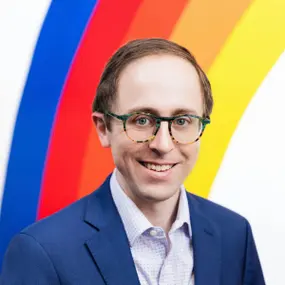
Disability Inclusion Partner
Myles works for Peak Performers, a nonprofit staffing agency. Peak helps government agencies and businesses build a more inclusive workforce by hiring talent with disabilities. As a Disability Inclusion Partner, Myles' job is to change minds about what it means to live and work with a disability. Myles has a background in B2B sales, recruiting, and digital marketing. Outside of work he spends his time designing and playing hobby board games and currently has four games coming out soon.