The Missing Link in Workplace Change: Why Managers Make or Break Inclusion with Julie Gawle
Organizations invest significant time, money, and resources into new technologies, processes, and inclusion initiatives, but successful implementation doesn't guarantee successful adoption.
In this episode of Changing Minds & Changing Lives, host Julie Sowash sits down with Julie Gawle, Senior Change Advisor at Meaningful Change Consulting, to explore the critical difference between project management and change management. Together, they discuss why so many well-intentioned workplace initiatives struggle to gain traction, the pivotal role managers play in driving adoption, and how organizations can create lasting change by focusing on people, not just processes.
The conversation covers manager enablement, stakeholder engagement, emotional intelligence, diverse hiring initiatives, and practical strategies leaders can use to build support, trust, and long-term success across their organizations.
In this Episode:
- The difference between project management and change management
- Why successful implementation does not guarantee successful outcomes
- Common warning signs that workplace initiatives are failing to gain adoption
- How inclusion and disability employment programs benefit from strong change strategies
- The critical role managers play as gatekeepers of organizational change
- Why emotional intelligence and empathy are essential leadership skills
- How organizations can measure adoption beyond traditional metrics
- The importance of leadership alignment and prioritization in times of constant change
- Practical ways to better prepare and support managers during transformation efforts
Resources & Links:
Changing Minds and Changing Lives
Interview with Julie Gawle
Aug. 13 2026
Julie Sowash
Hi everyone. Welcome back to Changing Minds, Changing Lives podcast. My name is Julie Sowash. I am one of the co-founders and currently Strategic Advisor for the amazing team at Disability Solutions. This season, so far, the podcast has been really fun. If you haven't caught up on some of our past episodes, Dr. Vicky Verlezza last week or last month, excuse me, was so great. We had such a meaningful conversation. And she just gave me a lot of energy. I love good passion and we need to hear that more often. So I would encourage you to go check out some of our YouTube. Definitely check out Victoria. She was fantastic. Our conversation today is probably gonna be a head scratcher for a minute, but not very long. I promise you, this is one of the most important conversations that I have with TA leaders, diversity leaders, operations leaders when we are talking about building truly inclusive programs for people with disabilities or any successful business project we are supporting implementation of. And that's why my guest today is so important. So let me introduce Julie Gawle. She is a Senior Change Analyst at Meaningful Change Consulting, LLC. She is a changing communications expert with more than 20 years of experience helping organizations navigate change. She's worked with Fortune 50 companies, organizations across healthcare, tech, telecom and energy to improve engagement and adoption during major initiatives. Major initiatives. So huge, huge projects. Julie helps leaders turn communication into action with a focus on what's really, really important. And I'm so excited to talk about manager enablement, stakeholder engagement, and the human side of lasting change. So Julie, welcome to Changing Minds, Changing Lives.
Julie Gawle
It is so wonderful to be here today. Thank you. I'm really excited about our topic and I'm excited about where our conversation goes today. I agree with you. I think that this is one of the most important topics in business today, and so I'm looking forward to digging into it with you.
Julie Sowash
So first of all, help our audience understand what does change management mean? And give me an example of maybe a project that you've worked on that's unrelated to diversity or disability to help understand kind of the scale and importance of the work that you do.
Julie Gawle
Right, right. So change management, by definition, is a structured way of helping people move from the way that they operate today into a way that they're gonna to need to operate in the future, very simply. So a lot of times we hear about project management. Project management focuses primarily on delivering the solution. So that might be the system, the process, the structure. It also includes timelines, deliverables. But change management focuses on whether or not people are gonna understand the change, if they're gonna know what's expected of them, if they're gonna have the support that they need in order to be successful in the new way. And ultimately, they're able to work different. So the goal here with change management is not necessarily, like, to deploy a solution. It's to help the organization achieve the outcomes that the change was intended to produce. So my background has been a lot in technology deployment. For those of you who are out there in HR, I've worked a lot in Workday. I actually worked at Workday for a little while. So if, like, Workday is your ATS, Workday’s your HR solution. I’ve worked with Workday for quite some time. And so if you think about, you know, what do I do kind of on a day-to-day basis? Well, A) it changes a lot, which is why I love the work. But, you know, any company who has decided that they are going to implement Workday, Workday is a very far-reaching kind of technology. You might have some core HR things like transfers. You might have hiring. You might also have payroll if you're gonna do that part of Workday. And so what I would do is kind of come in, partner with the business, partner with HR, figure out who is impacted, how are they going to be impacted, how do they do things today, and how are they gonna do things tomorrow? And then figure out what's the difference between those two things? And then the difference between those two things, that becomes my change strategy, my change plan. It becomes a communication plan, a training plan, an engagement plan, a sustainment plan, a readiness plan. You know, I think another misconception, sometimes if people have heard the term change management is that it's emails and it's training, but it's actually quite a bit more than that. So I think that's one of the things that, you know, would be good for us to talk about is all the other things that change management is included. But yeah, I've implemented Workday a number of times. And, you know, it's always a challenge because a lot of times everything is changing for folks. And you gotta focus on what managers need to do differently. Managers are a key audience anytime you're deploying Workday. So I know we're gonna talk a lot about managers in our conversation, but hopefully that gives everybody a maybe a little bit of a grounding on what we're talking about today.
Julie Sowash
I think it does. And I think it's important that you made a good distinction there, is, and if I could say it simply, tell me if I'm wrong, because I try to oversimplify things, is you’ve got project management, which is the solution.
Julie Gawle
Yes.
Julie Sowash
And then you've got change management, which is the adoption of said solution.
Julie Gawle
Yep, exactly.
Julie Sowash
Is that kind of fair?
Julie Gawle
Exactly. That's very, very nicely done.
[laughs]
Julie Sowash
So when we're talking about. So you know what we do. Let me put it this way. At Disability Solutions, we helped and do still help big companies around the world build programs that help hire and retain talent with disabilities at a scale, right? So what's kind of generation 1.0 of disability employment was find a manager who's really passionate and hire disabled people at their facility, at their factory, at their office, which was great. But what we did that really kind of was the next generation was say, “How do we live in the technology, the data management techniques and the policies so that we ensure that when I walk away, you've got a tool that you can continue to scale with?” Because we want to live and thrive in the systems that hiring managers, that TA leaders, that recruiters are already using. And when we built those, I could say probably within weeks of starting, whether the project would be a long-term success or something we would have to fight to get over the line based on how they approached the implementation and adoption of the project. And too often what we saw, it kind of went to two scales. One is you had a very passionate leader who was passionate about making disability and employment work in their organization. Or you had someone who is sort of voluntold to get this done.
Julie Gawle
Yes, yeah.
Julie Sowash
And I've had both. They both have their challenges. And so when we're implementing kind of these kind of projects, what are some of the, why do so many well-intentioned workplaces struggle to create these types of initiatives that have lasting results?
Julie Gawle
Yeah. So I think that's a really good question. And I've seen a couple of reasons. Number one, I don't think that they quite understand that you can't just throw a couple emails at it and expect adoption, you know? Change is hard. Change is scary for a lot of people. Any change. I’m, you know, being completely kind of solution agnostic here. Any change is always a concern. And I would say secondarily, I don't think that people, that organizations focus a lot on, like, mindset and behavior. There's a lot of, it's like you said, voluntold. Back in the day, I used to call it comply or die.
[laughs]
And, you know, it's just they assume that because the solution is out there, it's going to be successful and people are going to use it. And I just don't think right now. Or I, you know, I've seen it work both ways. Some organizations are really good. But in my experience, it's really been that people, organizations don't want to take the time needed. They're like, let's go, go, go. And let’s get the solution out. And hey, my tech team built this solution. Or my process team’s rebuilt this process. Let's get it out there. But they're not willing to kind of slow down and focus on the people side. So I think it's kind of a time thing, and it's also a people thing. You can't, like, it's really hard for, like, one person to lead the charge, you know? It’s sometimes you need. It can be doable, but you sometimes need a little bit more people than organizations are really willing to invest in.
Julie Sowash
Right. And what I think is really interesting, having been on the tech side and the implementation side and the DEI, kind of the diversity side, is when I first started this work, I got really frustrated because I didn't feel like they were treating these initiatives as business initiatives, as business strategies, which I still think is true. But I also realized after watching a bazillion kind of, you know, Workday implementations, so on and so forth, that this is actually a structural barrier within organizations. That they think that adoption is going to happen because they announce it, because they release it, because they spent a million dollars on it. You know, kind of talk to me about what are some of the warning signs that you see that a project is going, is looking ok on the implementation timeline, but in reality is failing?
Julie Gawle
Yeah, I definitely agree that you can have an extremely successful implementation, and your project is not gonna achieve the outcomes that you would expect. So some of the warning signs that I have seen are people don't know what you're talking about. For example, a lot of times in my work, we’ll send out a survey. We have readiness surveys that we send at specific points in time throughout the implementation. So you might announce the change and announce some key information and then send out a survey and do a test. It's basically a test to check how much are people paying attention. You know, sending out manager surveys, sending out employee surveys. Mid, you know, mid-senior level people, how much are they paying attention? And, you know, when you don't get even maybe 3% participation back on that survey, that's a warning sign that it just didn't land. Some of the content, even if you do get good results from that survey, that can be another. And, you know, maybe what's in it, people aren't getting it. But, you know, a lot of times when we are, as change managers saying to, you know, even senior leaders go out and talk about it. They might report back to us that they're getting a lot of questions. Managers aren't understanding. I think that a part of change management is really being able to keep your ear to the ground, not just as a change manager. If I assume I'm the change manager on our pretend project that we're talking about here, you know, I might not be able to be out in the organization knowing what's going on, but it's my responsibility to ask questions of the people who are on the project. What are you hearing? What is the feedback? And if you're not hearing that feedback, I think it's important to go out and seek it. Seek it out. Because again, adoption takes time. You’re not gonna get something probably within the first two months. You know, it’s gonna take a little bit of time. You might get somebody to log into a tool. But effective adoption and long-term success that ramp back up takes a little bit of time.
Julie Sowash
Yeah. I mean, I think that's such a great point. Because again, kind of in initiatives that we’ve launched, people are very eager to see results.
Julie Gawle
Yeah.
Julie Sowash
And I think if you have a, let's say, a hire that doesn't work out, that is a real ding on morale. Or you have to make some adjustments within a system to make sure that candidates are actually moving through in an equitable way. Then the hire comes a little bit later. And so, really, that consistent communication and having a willingness for the people who are participating in initiatives to say, “This isn’t working.”
Julie Gawle
Yeah.
Julie Sowash
Or, “This is the feedback I've got.” I've noticed in my, in our work, has been it's sometimes hard to get a front-line manager to say, or an HR manager a recruiter to say, “We're not seeing what we need.” “The positivity isn't there.” “They aren't, you know, we aren't ready yet.” Because they're scared to say something negative on a senior-management initiative.
Julie Gawle
Yeah, yeah. 100% agree, 100% agree. And I think that, you know, there are times that people kind of have to be bold. But you can give feedback in a safe way and maybe speak truth to power by finding the right, you know, channel to get to. But I want to make sure that we really focus, because you brought up the idea of the managers there. And I think that that's something that is just super important, especially when we're talking about diverse hiring, you know, but is the manager the right person always? Because I think maybe sometimes there might be assumptions that, hey, it's HR’s job to be doing this. And, you know, that's not really necessarily true. But, you know, I worked on a project a number of years ago at a big financial institution on ensuring that we had diverse hire, diverse interview slates. And, you know, that was something that it was treated at the time as this is just policy. You know, back to my comply or die thing, you know? You have to have one, you have to have at least one woman on your interview slate and you have to have at least one diverse candidate on your interview slate. And at the time, you know, I'll look back and and take it. I worked on it, but we didn't really nail the message quite well, because all we heard, the feedback that we heard was, this is taking too much time. The one woman on my team is on vacation. The one diverse candidate on my team isn’t available, you know? Who am I supposed to get to interview? And rather than seeing that as a symptom of the broader problem, that the company wasn't really diverse enough, because you can't even find a diverse interview slate, you know? We really kind of had to take a step back and not and, you know, really get into the hiring managers. We had to pull the CHRO in to be talking about it. We really needed more senior engagement and conversations about why this was important. This isn't really just a governance thing, you know? This is a completely different way of conducting your interviews. So focusing on that mindset shift and figuring out who is the gatekeeper to this decision? And who is the gatekeeper to this mindset? I think is really important.
Julie Sowash
Yeah, and I think it's important. And I've worked on similar projects kind of on the other side of there has to be a diverse candidate slate versus an interviewer slate. And there was always a lot of pushback on those types of initiatives. And I cannot, I can say fully that I agree with you because the way it was communicated, and the way the organizations I worked with is, it's because we have to.
Julie Gawle
Yes.
Julie Sowash
It's not because this is gonna make our business stronger in the long run. It's not because we desperately are in need of Black and brown talent in these areas of the business and we aren't getting to them because our current strategy isn't working. It's like, look, you just gotta do it. Just do it.
Julie Gawle
People get tired and they end up with you gotta just do it.
Julie Sowash
Yeah.
Julie Gawle
And I think that also kind of goes back to what I was saying at the beginning of our conversation. Like, change like this takes time, and you can't just communicate it a couple of times and assume that it's gonna land, you know? It takes work. What's the adage, you know, you gotta tell people what you're gonna tell them. Tell them. Then tell them you told them. Then remind them that you told them. I think it's, like, you have to tell people something seven times before they actually get it. It's really the same kind of thing with change, especially something that requires such an important mindset shift as diverse hiring. You gotta make sure that you're continuing to focus on the burning platform. Why are we doing this? What is it actually mean to your business outcomes? And, you know, inspire folks to. Inspiration goes a really long way.
Julie Sowash
So I think what you're making, though, is a really good point in terms of ongoing adoption too. And so especially with, I want to say, human-centric initiatives is, you can communicate it for six months, and then maybe our transformation leader gets pulled off into some cool new project they're working on. And then senior leadership just expects things to continue to adopt and be successful from there. But talk to me about what a good long-term approach looks like to keep these types of initiatives moving in the right direction, and how we truly measure adoption.
Julie Gawle
Yeah, that's a really good question. So I am going to be a little maybe unrealistic here, but I'm gonna talk from kind of a perfect world here. So I believe that any change that you introduce into an organization needs to have an owner long term, a long-term owner. And who is the long-term owner in your organization of ensuring that you have diverse candidate slates? Who, you know, I'm just theoretically talking with audiences. Who is that person? If you don't know, somebody needs to be responsible for that. And every once in a while they need to be reminding managers this is important. You know, doing some top-down cascading from the most senior levels down through the organization to that, that this is something that is, you know, an organizational prerogative. And this is why we do it. I believe very strongly that you need a long-term owner for any kind of change that you're gonna introduce. You know, maybe for those of you who, you know, have Workday, you probably have some sort of HR operations team who's responsible for maintaining Workday. It's really the same kind of concept. Who is going to be owning this moving forward? Who's responsible for achieving those outcomes? And then as far as measurement goes, I think that that's really important. Obviously with a lot of our HR technology these days, there's a lot of reporting capabilities to ensure that you do have diverse slates, either candidate or interview. Harkening back to the project that I worked on. But I wouldn't underestimate the importance of focus groups and even surveys just to get a pulse check out there. And they don't have to be big. They don't have to be thousands of people. But maybe a small population of hiring managers, a little survey to check in. Because that's more of like a sentiment survey, you know? That’s not the objective data that you're gonna get from your, like, your ATS or something like that. It’s more of the interview kind of based data.
Julie Sowash
Yeah. And sentiment changes over time. And today I can be really excited about it, and tomorrow I can be really unhappy with it. And it ebbs and flows because, you know, something you and I were talking about before we hopped on is how critical managers are to change. I mean, in essence, every team that I've ever managed or every project we've ever worked on, managers are essentially the gatekeepers of change.
Julie Gawle
They are, they are.
Julie Sowash
And so, some of them are great champions of progress. And some of them are intentional barriers to progress. And some of them are very much unintentional barriers to progress. So, you know, talk about why is it so important to understand A) the head space that a middle manager lives in these days? And how their head space and what information they're provided and incentive they're provided fosters success?
Julie Gawle
Yeah, so to be maybe a little provocative here I don't know that they are provided with a lot to foster success. And I think that that's one of the challenges that I really see. You know, a lot of times people are promoted to managers because they were good at being individual contributors. But ultimately, the skill to be a manager and even have the, you know, right EQ to be a manager is very different. And in my experience, you know, especially the bigger companies that I've supported throughout my career, they're just they just assume that because you were good at being an individual contributor, are gonna be good enough being a manager. And there are study after study. Prosci, which is kind of the change management golden standard, so if anybody doesn't know Prosci, you can go out to prosci.com P-R-O-S-C-I. They, you don't know anything about change management. They'll help you. But they've done research showing that people want to hear from the CEO and their manager. Willis Towers Watson have done research about the role of the manager and transformation. And when you focus on the manager, you are two and a half times more likely to achieve your business outcomes if you focus on the manager. I mean, it's just kind of study after study after study, the importance of the manager. But too often in a change plan, I've seen that, you know, managers are gonna get a communication and some talking points and consider it, that's good enough, you know? We gave them what they needed and that's good enough. But I would challenge organizations to say, you know, are your managers skilled in being able to navigate the emotional complexity that comes with talking to an individual employee about how their job is gonna change? And if not, then, you know, kind of have a, you really need to kind of help your managers out and give them some tools in order to help them communicate that change a little bit more. You know, I have a little acronym that I use which is CORES, C-O-R-E-S. C stands for context. So making sure that the manager has the context and the manager is able to communicate the context of the change. Why is the new way going to be better than the old way? And sometimes that can be really hard. And so especially in situations where it's maybe an unpopular change, being able to equip managers with the ability to say, “We might not like this, but this is, that's ok. You know, this is how, this is why we’re doing it. And this is why it's important.” So the O stands for outcomes or objectives. Why are we doing this? Why is it critical? And then the R stands for rally, which is really, you know, helping people become inspired. People, when managers can inspire and motivate employees. There was another study done that showed that employees would be 67% more engaged, and they would see significantly faster adoption and change when managers were able to have the tools to inspire, tell stories, things like that really rally their team. The E in CORES stands for enable. Making sure that they have the resources in place in order to be successful in the future. And then of course, S stands for sustain. So, C-O-R-E-S It’s just kind of a little easy acronym to remember when managers need to communicate change. And also organizations can use that little acronym to say, “Are we giving managers all of these elements?”
Julie Sowash
Yes. And what does success within each one of those elements look like? I think that's the really other important piece of what you're talking about is, is that because managers are so overloaded and they are frequently just told to communicate X. Say this. Run with the party line. You're fine. You're fine.
Julie Gawle
Do it.
Julie Sowash
I mean, it's demoralizing to them, because they feel like they're sent a communication and they can't realistically explain why it's important.
Julie Gawle
That’s right.
Julie Sowash
And they probably don't have the buy into it yet either. Because they've also just been told, “Hey, here's an email. Make this happen.” And when you're talking again about people-led or people-centric initiatives, the emotional intelligence of your managers becomes critically more important and we don't provide them with that guidance. So on a project-by-project basis, you have to start trying to equip them with some emotional intelligence by being emotionally intelligent yourself as a leader.
Julie Gawle
That’s right.
Julie Sowash
I think, you know, you're just seeing the downward trickle.
Julie Gawle
I would also say, like, underscoring this entire CORES things has to be empathy. Empathy is the foundation of everything, you know? Understanding, being empathetic to what's coming down from you. It's almost like that idea of, you know, assume good intent. Nobody is introducing a change just to make your life difficult. There is some purpose to it.
[laughs]
And then empathy down. Meaning how are you going to talk to your direct reports with a sense of empathy so that they understand that they it's that emotional, that EQ that you were talking about. And not all managers have it.
Julie Sowash
No. I’ll say this and then we'll have a closing thought. But leading people is like raising children. No one tells you how to do it. You've just got to figure it out. And you spend a lot of time crying, messing up and then trying to fix it. So the fact that we don't engage as, I mean, the fact that corporate America has not figured out the value in creating emotionally intelligent, well-trained leadership still blows my mind. That could be an entire different podcast.
Julie Gawle
It could be.
[laughs]
Julie Sowash
But as we wrap up, I think this has been an insightful conversation. I think it's such an important conversation. And so just, sorry you're hearing my dog in the background drinking a lot of water, I would guess right now. So last question. When organizations are feeling overwhelmed by change, whether it's, like, a transformative initiative, an accessibility effort, a new solution like implementing a new ATS or a CRM, what's the one thing that you wish leaders would stop doing? And the one thing that they should start doing instead?
Julie Gawle
So the one thing that I wish that they would start doing is making sure that leaders are aligned. And when I say aligned, I mean that they are talking the talk. And that's followed up by action outside of, I'll just say, the boardroom, the senior leadership room. You know, looking at a portfolio of change, making sure that everybody knows what that portfolio is and that they are all aligned, that it is equally important. I am consistently amazed at the volume of change that we are faced with just as human beings right now. It is possible to continue, you know, building the airplane and flying it. And I know sometimes that is what an organization has to do. But I think that the thing that I wish would stop happening the most is that everybody says this is the most important. And so you have this popcorn of, no, I'm more important, I’m more important, I'm more important. So employees don't really know where to look. So if an organization can align at the most senior lead, at the most senior level as to what truly are the most critical initiatives, so that employees know where to focus and then appropriately sequence all the other ones so that employees can focus. I don't know another better word for it. So that employees can focus as these different initiatives kind of come at them. And the last thing I would say is please prepare your managers. They're very overloaded. They're very tired. They don't always know what they're doing. Prepare your managers. That's another thing.
Julie Sowash
A perfect end note. If our guests would like to find you or our listeners, tell them where to get ahold of you.
Julie Gawle
Yeah, so you can find our website at meaningfulchangeconsulting.com. I am at Julie at meaningfulchangeconsulting.com. And you can find me on LinkedIn by searching my last name, Julie Gawle, G-A-W-L-E. And I think my phone number might end up being in the show notes, so you can contact me as well.
[laughs]
Julie Sowash
You're very brave. Julie, thank you so much. Today was such a great conversation, a truly-needed conversation. And I think it helps both our TA leader listeners and our HR listeners understand more about how to approach an initiative, but it also helps our community understand a little bit behind the curtain about how initiatives get built, how they fail, and how much pressure managers are under to make, to your last point, which I think was so beautiful, multiple initiatives successful at the same time. So thank you for joining us, guys. Go check out our back catalog. Follow us on YouTube. Lot more to come this year. And we'll be putting out our Disability at Work Survey. Go take it if you haven't. And we'll be kicking off our fall webinar series here pretty soon. So talk to you soon. Bye.
Julie Gawle
Thanks. Bye, Julie.
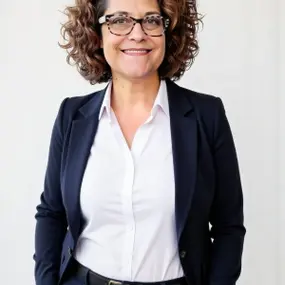
Senior Change Strategist
Drawing on more than two decades of leading communication and change initiatives across global organizations, Julie helps leaders, communicators, and change practitioners understand why employees do not change because they received an email, and why managers, conversations, and engagement matter far more than most organizations realize.