The Power of Belief: How Welby Broaddus Turned Barriers into Opportunity
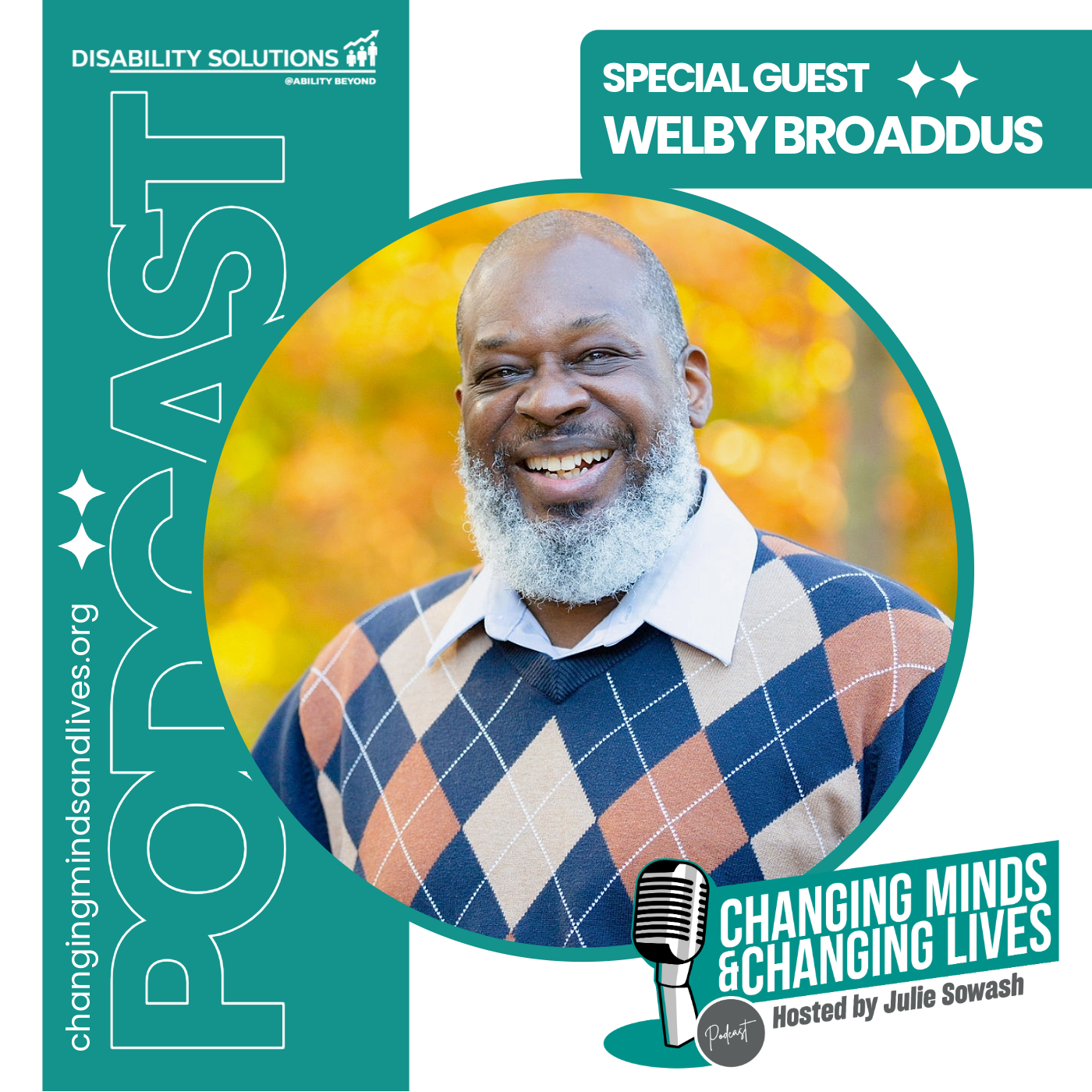
In this episode of Changing Minds & Changing Lives, host Julie Sowash sits down with disability advocate, entrepreneur, author, and workforce development leader Welby Broaddus to discuss his journey growing up with a visual impairment and the people who helped shape his path to success. From navigating public school, overcoming bullying, and defying a school counselor who told him he was “not college material,” to earning two college degrees and launching Welby Broaddus' business, Welby Broaddus' story is a powerful reminder of what happens when potential is recognized instead of underestimated.
The conversation explores the importance of self-advocacy, the impact of supportive mentors, and why employers must move beyond assumptions when hiring people with disabilities. Welby Broaddus also shares insights from his book, Leading Blind Without Vision: The Benefits of Hiring the Blind and Visually Impaired, and discusses how storytelling can change perceptions, open doors, and create more inclusive workplaces. Whether you're an employer, educator, workforce professional, or disability inclusion advocate, this episode offers valuable lessons on resilience, opportunity, and the power of believing in people.
In This Episode:
- Welby’s journey growing up with a visual impairment and navigating public school as a student with disabilities.
- The challenges of bullying, low expectations, and advocating for classroom accommodations.
- How one school counselor helped build the confidence and self-advocacy skills that changed Welby’s life.
- The lasting impact of being told he was “not college material” and how that fueled his determination to earn two college degrees.
- Lessons learned from vocational rehabilitation services and the importance of access to resources and support.
- Why entrepreneurship became Welby’s path and how his grandfather inspired him to start Broaddus Business Solutions.
- The inspiration behind his book, Leading Blind Without Vision: The Benefits of Hiring the Blind and Visually Impaired.
- How storytelling helps change perceptions and create opportunities for people with disabilities.
- Common misconceptions employers have about hiring people with disabilities and how education can help overcome them.
- Why disability inclusion is both a business opportunity and a pathway to meaningful social impact.
Resources & Links:
CMCL Full Interview with Welby Broaddus
September 23, 2026
Julie Sowash
Hi everyone. Welcome back to Changing Minds, Changing Lives podcast. My name is Julie Sowash. And as always, I am your humble host and co-founder of Disability Solutions. I still have the honor every day of being a strategic advisor to Keith and Ashley and the team over at DS. And we have, again, another great guest that we have been connected with, and I've been waiting to record with for more than a month. His name is Welby Broaddus. He is a visually-impaired business strategist, keynote speaker, author and disability advocate focused on creating more inclusive opportunities and entrepreneurship, education and employment. Through his company Broaddus Business Solutions, he helps individuals launch their own businesses, support workforce development and initiatives and advises organizations on the benefits of hiring people with disabilities. Broaddus is also, excuse me, the author of “Leading Blind Without Vision: The Benefits of Hiring the Blind and Visually Impaired,” which serves as a guide for employers, HR pros and hiring managers seeking to create more inclusive workplaces. What we're all about here at Changing Minds, Changing Lives. Welby brings more than a decade of experience in workforce development and an interesting twist: juvenile justice, which he has championed both equity and opportunity for underserved communities. He serves as a chair of a Breakthrough Series Collaborative dedicated to addressing racial disparities in juvenile justice and mentors college students navigating visual impairment. Whew. What a bio that is. At the heart of Broaddus’s work is a belief that leadership requires empathy, equity, and ability to see people beyond assumptions and stereotypes. Mr. Welby Broaddus, welcome to Changing Minds, Changing Lives.
Welby Broaddus
Julie, thank you for having me. It’s an honor to be here today.
Julie Sowash
That was quite a bio
[laughs]
Julie Sowash
And I am ready to dive into it. But first, as we were kind of talking about before we recorded, a lot of our listeners, viewers may not have the privilege to have people who are blind or visually impaired in their everyday lives, which I am lucky enough to have in my life. And so I've built a great deal of comfort in how to interact, how to hire, how to engage people with all types of disabilities, including people who are blind or visually impaired. And also just hang out and be their friends, which is the best part. And so I thought what we could do is spend a little bit of time talking about your personal journey as little Welby. And what it's been like for you growing up and navigating life with the visual impairment.
Welby Broaddus
Oh, yeah. Thank you. I don't have a problem telling that story. So I was born here in Akron, Ohio. And actually, just a little caveat for you. So I was born in the hospital at Akron General Medical Center. That was the hospital I was born in. And there's two famous NBA players that actually was also was born to this hospital. I tell this story when I do my presentation.
Julie Sowash
Ok.
Welby Broaddus
So it's the same hospital. LeBron James was born there. And Steph Curry both was born at this hospital.
Julie Sowash
Really?
Welby Broaddus
Yes.
Julie Sowash
Oh wow.
[laughs]
Welby Broaddus
So I think that if I wasn’t visually impaired, since I was born before them, I might be one of the best NBA players as well. I think I got a good jumper.
Julie Sowash
I think it’s in the water right there.
Welby Broaddus
Yeah.
[laughs]
Welby Broaddus
Yeah, so I was born. There’s two train of thoughts when I was born in the hospital. Either I was born visually impaired or something happened while I was there. And I think it was the latter. So I'm diagnosed with optic atrophy and nystagmus. So optic atrophy is a severely optical nerve damage in both my eyes. So I am so severely nearsighted that that I am considered legally blind. Even with me wearing my glasses, that doesn't help me make my vision be 2020.
Julie Sowash
Ok.
Welby Broaddus
And the nystagmus, I have that in my left eye. So my left eye tends to move on its own from left to right. Some people having nystagmus where their eye goes up and down, but mine tends to move left and right. And so with nystagmus, I can't control the muscle. So I really don't even use my left eye. I mainly only use one eye, my right eye.
Julie Sowash
Ok, ok. And so you were born in an amazing hospital. And you, when you went home as a newborn, you had these disabilities.
Welby Broaddus
Yeah. Yeah, so. And what happened was my lungs wasn't fully developed. And my mom did, when I wrote my book, I tell about this in my book. My mom didn't, I think she forgot about this, what happened. But I did research. So my lungs wasn’t fully developed. So I had to spend some time in incubator. It was to the point my mom, after my mom's maternity, said, I think she stayed there for a week with the hospital with me. She ended up going home. I had to stay ten extra days in the hospital. And they think that's what caused my vision cuz I had to stay in the incubator for so long. The oxygen incubator caused me to be visually impaired.
Julie Sowash
Oh, wow. Ok.
Welby Broaddus
Yeah.
Julie Sowash
That’s, yeah, I would not have thought that. So you’ve always known life as a person who has a visual impairment. You're not like my friend Matt, who became visually impaired when he was closer to an adult, but he was still in his teenage years. How do you feel like that has changed your perception about your disability or how you move in the world?
Welby Broaddus
I think it gives me, I think with my vision impairment, I had to grow up fast. I had to, and I'm not saying growing up, I still was a kid, but I had to really recognize who was for me, who wasn't for me at a very young age. And I think a lot of people don't have to go through that. I had to recognize that in the beginning. Especially when it’s time for me to go to school. Because I always saw a specialist. I didn't go, I never went to a regular eye eye doctor. Actually, me going to, like, the eye, Visionworks, in the mall those type of, Provision, those type of places, it really doesn't do me a favor. Actually does more for the doctors cuz they get to see somebody like me with my vision. It's more a benefit to them to see me versus me, me seeing them. So I always saw a specialist. I went to the Cleveland Clinic. And my doctor, Dr. Price, he's a great guy. My name is Welby. He's a shoot me a show called Marcus Welby, M.D. is a doctor show that come on. So he always call me doc when I go there. So I feel like I was part of it. I felt like I was part of the team. But when it was time to go to school, they told my parents that it's probably best that I go to a specialized school for kids who are blind or visually impaired. And at the time, I was 5. My brother was 2. And my parents was young. They was like in their 20s. And they had just bought this house. So they couldn't afford for me to go to a specialized school for kids who were blind or visually impaired. So I ended up going to traditional public school. And elementary school was pretty fine, because you more, is more hands-on learning. Elementary school, you more, you do, like, you work together as a team and things like that. And you got more one-on-one. So, and the kids at that age, they're more curious than, like, trying to be, pick on you and things like that. I mean, they would always want to say, “Hey, Welby, need any help?” “I read that for you.” Or, “You want to help me with that?” So that was fine with me. It wasn't until I got into junior high school or some people call it middle school now. But one thing that I know is a difference. In my entire time at elementary school, I always got A's and B's all the time, alright? And I loved school. I loved going. I loved to learn. So two things happen when I got to junior high school. I started to get picked on and bullied. And also my grades dropped. And my parents and my counselor, my counselor’s named Carol Cherone. I'm gonna put this out there too. I would love to meet her and thank her for everything she did. I know she retired and somebody said that they think she moved out to the West Coast. Her name is Carol Cherone. She used to be a counselor. Akron Public Schools in Akron, Ohio. So if anyone listening, you may know her. Maybe can reach out to you. I would love to talk to her. So they thought that my grades had dropped just cause the transition from elementary school to junior high school. And it wasn't until my counselor, she ended up talking to my teachers. And they said, well, we don't think that's it at all. We noticed that when we write stuff on the board or put something on the overhead projector, he write down part of what's on the board and almost like he guessed at what he think it is, or he leaves it blank. And that was true. That was so true, that that's what I was doing. And also they said that when we notice, when we call on him to read something, he has to put it real close to his eyes, even with his glasses on. And so when my counselor found this out, she talked to my parents about it. And she told us that, “Hey, I’m just gonna try to find something, get some resources to help Welby, you know, be more successful in school, to pull these grades up and things like that.” So she found VSVI, in which at the time it is, that was Visual Service for the Visually Impaired. That's part of the Ohio Behavioral Rehabilitation Agency in Ohio. Now, it's OOD, Opportunities for Ohians with Disabilities. And my counselor at the time, his name was John Buchman. And I worked with this guy since I was, think I was 11 until I was about 30 years old, off and on throughout those years.
Julie Sowash
Wow.
Welby Broaddus
Yeah. And so, when we met with him, he came to the school. My parents was there. And he said, “Hey, we gon’ get you some resources to help you improve your grades and things like that.” And me being in junior high school, I was already getting taunted, picked on, talked about. Like, I got called Four Eyes, Mr. Magoo, all types of things I've been picked on. I was so nervous about what this guy's gon’ give me to bring more attention to myself being a visually-impaired kid in a public school. I dreaded it. And I never forget the day
[laughs]
Welby Broaddus
that he is coming to the school to share all the resources he had got for me. I was getting ready for school one morning. My mom was getting ready for work and she said, “Well, today you need to catch the bus home cuz me and dad are coming to the school today.” I said, “For what?”
[laughs]
Welby Broaddus
I had an idea, but I was hoping there's something else. So Mr. Buchman’s coming up. He gon’ share what are the other resources he got for you. Julie, that day I was so nervous. I was like, “Oh my God.” I dreaded it. And in the afternoon we got our call slips. We got called down to the principal's office or the counselor. You would’ve thought that I was about to get expelled from school when they called my name that afternoon to go down to Ms. Cherone’s office. I was so nervous that I took the long way. I went around the whole school building before I even
[laughs]
Welby Broaddus
even went to her office. And so when I got in there, I could hear in her office that they, my parents in there talking. But they all, like, having a good old jovial conversation. They laugh and had a good old time. So when I walked in, Ms. Cherone said, “Oh, here’s Welby.” And my parents said hey. I said hi to him. Mr. Buchman shook my hand. I said, “How you doing?” And we sat down. And I could tell he was really excited about what he did for me. And I’m sitting here like, “Oh, I don’t know what’s gon’ happen.”
[laughs]
Welby Broaddus
So he started out. He said, “Hey, I got some resources for you to help you. Hope these things help you pull your grades up, even help you out in the community when you navigate throughout society as well.” I'm like, “Ok.” So the first two things he gave me was some visual aid things. Like, he gave me some magnifiers and one cool thing I did get is like a little small portable telescope that I can use when I'm walking down the street to see addresses, street signs, name of businesses and things like that. All that, all those things were pretty cool because I knew that I wasn't taking them to school. So I said, “These are not going to school with me.”
[laughs]
Welby Broaddus
And so he talked about. He got me some other resources and things like that. So all the visual aids. Then he said the last thing he said, “Also we got you some, oh, we got some talking books.” So and at that time, talking books was books on cassette
Julie Sowash
Mmhmm.
Welby Broaddus
and on LP albums. I'm gonna give you a tribute for you to share with your listeners. You probably want to thank your friends who are blind and visually impaired, because if it weren't for us, you wouldn't have records with music on them.”
Julie Sowash
Really?
Welby Broaddus
Yes. In history, records was made for the blind and visually-impaired community to put talking books on.
Julie Sowash
Oh my God.
Welby Broaddus
Yeah, it just happened that somebody decided, let's try putting music on there, see what happen.
Julie Sowash
Yeah.
Welby Broaddus
So I’ll take my flowers for that.
[laughs]
Julie Sowash
Give me your snaps, yes.
Welby Broaddus
Yeah, yeah.
Julie Sowash
Wow, ok.
Welby Broaddus
Yeah.
Julie Sowash
Go ahead please.
Welby Broaddus
Yeah, and so I got these records with books on and cassettes and I got a record player. And now, mind you, I'm a kid in seventh grade and now I got my own record player in my home, so I'm ecstatic about that. It wasn't nothing fancy, it’s like the old box-type record players you had. And I got a cassette player. So I'm like, “Alright, so I can get these books. I can put them on my, play this at home. And things like that.” So that was, all that was good.
Julie Sowash
That's awesome.
Welby Broaddus
And then he says, “And also we got you some large print books.” And so he went in his bag. He pulled out this book. And I'm not kidding. It's not like the large print books we have today. Actually, it's about as big as your laptop. That's the size the book was.
Julie Sowash
Oh, wow.
Welby Broaddus
And my head just dropped. I was like this. And I sit there for a moment. Then my mom finally said, “Hey, what's wrong?” I said, “You guys expect me to walk into class with those big books?” I said, “They already talk about me now. I'm really gonna get picked on now.”
Julie Sowash
Right.
Welby Broaddus
And the whole, by me making that statement, I took the whole energy out the room. Everybody was quiet for a second. And then Ms. Cherone finally said, “Here, I got a great idea. This is what we gon’ do. You gonna take those books home. You gon’ use them to study from and do your homework from. You just bring your regular books to school and just basically pretend like I’m using them. But really I'm not.
[laughs]
Julie Sowash
They were props.
Welby Broaddus
Yeah, yeah, basically like a prop. And that's what I did. Because what happens is at this point, also my teachers started giving me the notes. Like, copy them for me. So I could get them off the board or overhead. And also I got, like, extra time to take my test if I needed it. Somebody could read my test to me. Extra time to do, like, assignments outside the classroom or things like that that I needed more time on. And everything, all that worked out pretty good. So my grades improved. And I passed all my classes. Now it's time to go to high school. Now, mind you, I get to high school, Ms. Cherone, my counselor, she doesn't come with me. She stays back at the junior high school. I get a new counselor. And I probably can count on one, on how many times I met with this, my counselor. And it is not more than five times on one hand.
Julie Sowash
In all four years?
Welby Broaddus
In all, yeah, yeah. Well, actually, so back then we did 9th grade in junior high. It was just, so 10th grade was high school. So it was three years.
Julie Sowash
Ok.
Welby Broaddus
So my counselor never helped me. So I had to do things on my own. Thank God for what I learned from Ms. Cherone. I knew how to talk to my teacher about what I needed. So I went to my teacher. I told him about needing extra time to take tests, extra time to do reports, and things like that. So it helped out a lot. Now, what it didn’t help me is, like, when I got to become a junior, I knew that I wanted to go to college. I wasn't sure where I was gonna go to school at this point, but I knew I was gonna go. So since my counselor really never met with me as a visually-impaired student, I took it upon myself to do everything I needed to do. So it's time to take the ACT test. So I fill out the packet, I turned it in. I go Saturday morning to take the test at 8:00 for four hours. And I got my results. It was horrible. My schedule, it was really bad. But at that time in Ohio, they didn't really care about your score. You just need to take the test there for formality, get accepted to a state college.
Julie Sowash
Ok.
Welby Broaddus
So I wasn't really worried about it at all. But what I did find out after the fact is that I could’ve went to my counselor, and they gave me a special form to fill out and get special accommodations to take the test. But she never told me about that because she never called me down to do that. But it wasn’t a big deal. So fast forward, it’s my senior year. So at this point I got more confidence in myself being a student that’s visually impaired. I got confidence in myself. I love myself being an individual that’s visually impaired. Because now my friends, they can't. People can’t pick on me anymore, because it didn't affect me. Actually, I gave, I would give it back to them just like they would give it to me.
Julie Sowash
Mmm-hmm.
Welby Broaddus
And also at this point, I know what I want to do with myself. So at this point, I'm going to Kent State and major in computer science. That's my plan. So, senior year your counselor call you in the office to map out what’s your plan after graduation. I couldn't wait to meet for this meeting. So I get there, my counselor’s office. My counselor’s like, “So Welby, what's your plans after high school?” I sat up my chair, chest was out. I said, “I plan on going to Kent State. I'm gonna major in computer science.” My counselor said with confidence, “You're not college material. You probably need to go find a job.”
[groans]
Welby Broaddus
So it deflated everything that I had in me. I sat there and I said, and I'm saying to myself, “I can't believe this person just told me this.” I said, “This is a person who never got a chance to know me as a visually-impaired student, never helped me. How can they tell me that I'm not college material?” And the person that I am and was at the time, like, that motivated me. So I sat there, I said. I said to myself, “Now I gotta go to college. And I gotta graduate. Because I know what I'm capable of doing. So I gotta prove this person wrong.”
Julie Sowash
Yep.
Welby Broaddus
And I probably stayed in my counselor’s office for about, like, another 20 minutes. But while we was there, it was like Charlie Brown's parents talking, Peanuts’ parents talking to me. It was like, “Wawawawawa.” So everything that she said I didn't, I couldn't tell you what we said after that. I just know that when I walked out of there, I was so motivated. I got to go to college and I got to graduate. So that summer I'm going to Kent State. I'm enrolled at Kent State and University of Akron.
Julie Sowash
Ok.
Welby Broaddus
So and I was going to Kent State. One of my buddies I grew up with, we was going, we gon’ stay at a dorm together. We had our dorm and everything. We gon’ stay together. And at the last minute, his parents said they couldn't afford it.
Julie Sowash
Oh no.
Welby Broaddus
Now mind you, already went to orientation at Kent. I’d tested out of math. Math was my favorite subject. I tested out of math. My mom comes to me and say, “Hey, do you still want to go to Kent State since Butch, his name was Butch, since he’s not going? If, you gotta let me know by Friday cuz I gotta submit a check to Akron U by Friday if you plan on going there.” So I decided. I was like, “Oh, do I want to go by myself?” So I end up going to University of Akron.
Julie Sowash
Ok.
Welby Broaddus
And this is how I know that God has a mission for me to be an advocate for individuals with disability, because this is how things happen. So I ended up going to Akron U. Now, my counselor was right about one thing. I didn't go to Kent State and I didn't major in computer science. But I did go to the University of Akron and I got two degrees. I got a Bachelor of Science in Technical Education, and I got an Associate’s of Applied Business Management Technology.
Julie Sowash
It looks like you are college material.
Welby Broaddus
Yes. So my first job after I graduated from college is actually getting a job back on campus, working this program. It was called Advancing Your Program. And at that time, they had the government had these programs that were welfare-to-work programs for individuals seeking some type of government assistance. They either had to be in a job or get some type of training to get a job or in college, in education, some secondary education. So what we did, we helped that population. We worked with that population. So jobs and family service refer people over to us, get in the program, to help them either get into school or get a job, get their basic skills up. So I taught basic math to the participants. But also through this department, we also ran a pilot program where Akron Public Schools, where we work with special-ed kids at the time, who was in 12th grade. They would come on campus in the morning and I would teach employability skills to them. And then in the afternoon, they'll come back and they work on different departments on campus. And I would be like a job coach go and make sure they doing the job right, things like that.
Julie Sowash
Yeah.
Welby Broaddus
And so I was a liason for the university and they had a liaison for Akron Public Schools, and it was Kent Russell. And so we would meet once a week. And by the second or third week he said, “Hey.” Because the high school that we worked with, they had, Akron Public Schools, they had a high school that was actually on campus. So the kids actually walk up and back and forth. So he say, “Hey, won’t you come down and meet the kids’ teachers and talk to them a little bit?” I said, “Ok, I’ll come down.” And this is how I know that the point I’m about to tell you what, this is what I need to be doing. So I go down. I meet the teachers, talk with the kids a little bit. He said, “Well, while you’re here I want you to meet their counselor.” Who do you think the counselor was?
Julie Sowash
Uh-oh. Not Ms. Cherone. The bad one.
Welby Broaddus
It was a bad one.
Julie Sowash
It was the bad one, whose name we don’t say.
[laughs]
Welby Broaddus
Yeah, the same person that told me that I wasn’t college material. Now I go down here. I’m working with her kids with two college degrees and working at the university with the program. And I tell this story all the time I do my presentation because two things. No matter what you, somebody tell you, as long as you believe in yourself and you know yourself, you do anything you want to do No matter who’s the person telling you. Cuz, like, a lot of people, if the counselor said this, I might be, who knows? I definitely wouldn’t be here talking with you if I listened to her. I know that for a fact. I wouldn't have no book And I probably would have no college degrees. But I believe in myself that I know what I'm capable of doing[a] because that person doesn't know me like I know myself.
Julie Sowash
Yep. Wow. You have put me through a roller coaster of emotions in the last few minutes, no joke. So I realized a couple of things. One is that when I was in elementary school, there was a kid in my class. I can see him plain as day. And he had a hard time with the projector cuz we had the overhead projector.
Welby Broaddus
Yeah.
Julie Sowash
The teacher would write on it. I don't know why we did it that way. And he would always get either notes or a large print version, or he'd be able to sit really close to the board.
Welby Broaddus
Mmm-hmm.
Julie Sowash
And I didn't know at the time that it was an accommodation, but it was obviously. And then all of the things that you just walked me through to get what you needed. And kids were so mean to him because he needed his glasses and he needed to be close to the board, blah, blah. And none of us knew what it took for him to get to that moment.
Welby Broaddus
Right.
Julie Sowash
That was the first thing. The second thing or the second thing it was just a shout out to OOPD, who, in my opinion, outside of the state of Indiana, is probably the best vocational rehabilitation system in the country. What a blessing for you to have a counselor from 11 to 30. Like, that just doesn’t happen.
Welby Broaddus
Right.
Julie Sowash
An incredible story. And then the last thing and I think the thing that I want to take away and then start to move into your business stuff is what Ms. Cherone did for you. That is the whole point of this podcast, of Disability Solutions, of all of my work in my life, has been to say, if we can convince one person, like a school counselor that Welby has a value, then she can not only change her mind about what people with disabilities can do, but she can change Welby’s life, which is exactly what she did for you. Not only did she give you the tips and tricks to make it work for a junior high kid, but she also gave you then the ability to advocate on your own behalf.
Welby Broaddus
Yes.
Julie Sowash
And if we could hopefully the bad one, the one we don't talk about, after seeing you, I hope she had an epiphany of like, “Hey, maybe I need to think a little bit more broadly.” We never know. But that could have been another moment of changing someone's mind because they saw what you did because Ms. Cherone believed in you because you believed in you, your parents believed in you. What an incredible story. Thank you for sharing it.
Welby Broaddus
Oh, no problem.
Julie Sowash
So let's talk about then you've graduated you've worked with the school, you've worked then now with some kids who are been offenders or reentering through juvenile programs.
Welby Broaddus
Yeah.
Julie Sowash
When did you start your business, Broaddus Business Solutions? And what made you go that direction instead of going into corporate America?
Welby Broaddus
So I started my business cuz of my grandfather, my mom's dad.
Julie Sowash
Ok.
Welby Broaddus
He’s passed now. Sylvester Kidd. Growing up with him, I was, from the time I was, like 3 all the way till he passed, I will always be with him, like, all the time. Like, he would drive me from home. He’d stay at my parents house for a while. He ready to go, I grabbed my coat on, back with him again. And he always had some type of business. He sold insurance. He sold Kirby sweepers. He had a business where he’d go and clean corporate offices. He always had a business doing something. And he had an office in his basement. And I got an aunt that we're like six months apart. And we'll be down this office. The might have his insurance letterhead. Like, we typing. Normally we didn’t, I know he didn’t probably want us. That letterhead probably cost a lot of money. We used his letterhead. We be on his add machine just adding up numbers like we running a business.
[laughs]
Welby Broaddus
And it really, I would be with him all the time when he goes, he had to do some business. I'd just be with him and I would soak all this stuff in. I like, dang, this is the life I want to do. I want to be in business, have my own business. And so that that pursued me go into business. And then the type of business I want to go into is because I said, “How can I help people who are less fortunate than I am, who may not know how to start a business, who may be going through something?” Cuz I'm that person with my disability. I have barriers. My barrier is my disability. Other people have different barriers they may have as well. But who's advocating for those people? I'm always, I always have been the person who wants to work with the underdog, the person who never really got a chance. And that's why I wanted to start my business to help that population out, to be successful business owners. Cuz everybody has a dream. Just some people don't get a chance to pursue their dream. And I always wanted to give them a chance to pursue their dream if that was a business that they wanted to start.
Julie Sowash
Very nice. So no, that's amazing. So tell me a little bit about then you've got your business, decided not to go the corporate route. But you did decide that it's time to write a book. And hopefully we get some of that amazing story I just heard in the book. And other people are privileged enough to hear your journey. But kind of walk me through the book itself and sort of your process of deciding to author it. So I always had the title first title of my book, “Leading Blind Without Vision.” That’s, I always wanted to write a book about me being blind or visually impaired. And so Georgetown University had this program. It’s called the Creators Institute. And it's a program where you can go in and they teach ya how to write your own book. They basically teach you how to self-publish.
Julie Sowash
Ok.
Welby Broaddus
But they have their own publishing company called, at the time it was called New Degree Press, it's called Manuscripts now, that’s a nonprofit publishing company. And so I found out about this. And now, mind you, I applied. But always in my mind is like, “Oh, they're not going to take me.” But I applied.
[laughs]
Welby Broaddus
Get called by Professor Koester here. Koester is the professor name at the time. He ran the course. But his assistant said, “Hey, he want to schedule an interview with you about your book idea.” I'm like, “What?” I couldn't believe it. So we get on a zoom call and I'm telling about me being visually impaired, talking about the book I want to write. I’m saying, “I want to write a book about me growing up being visually impaired.” Great. So he gave me some assignments. “Hey, I want you to go research. Find some YouTube videos of 25 other people that might be like you, blind or visually impaired that's successful.” Ok. I'm in the program. I'm shocked. I'm like, “I wasn't even expecting this.” So when you get in a program where we meet and it's a cohort. I don’t know if you’ve ever used a platform called Quip?
Julie Sowash
Uh-huh. Nope.
Welby Broaddus
So Quip is like a community. And they're doing away with it next year. They’re shutting it down. But it's a platform you go on where it may be me and you and, like, 500 other people. We all in this group and we all got a folder with all our work in it. And we just share each other’s information. Like, if you writing a book about something, I might know somebody you may want to interview. I say, “Hey Julie, you might want you want to talk to this person for your book.” Or something like that. And you might vice versa for me. So and basically the philosophy is if you write as a community, you're more likely to finish your book. And I strongly believe that as an author.
Julie Sowash
Ok.
Welby Broaddus
So I get into class. And so the first couple of weeks we just writing. And you have editors you work with in between time. So the first editor is called a DE, which is a distributing editor. And that person's job is basically to keep you on point, gets words on paper, gets X amount of words each week. And actually her name was Julie too. So we will meet once a week. Finally by the third week, she says. And they paired her with me cuz she has a disability as well. So they paired me with her. So we had the same type of community, same type of language. We understand each other. So she says to me my third week, she says, “Welby, I got a couple questions.” I'm like, “Ok.” “What made you want to write a memoir?” I said, “Well, I want to tell the story about myself growing up visually impaired, the struggles I went through that got me where I am today.” She says, “Alright, that’s good.” She said, “But normally people that write memoirs are people that are already successful, like presidents, athletes, celebrities. So when you write your memoir who all gon’ buy your book besides your family and friends and probably people in Akron?” And I'm sitting here like, “Is she trying to, like, discourage me from writing my book?”
[laughs]
Welby Broaddus
And so I said, “What you mean?” She said, “Nobody knows you.” And I'm saying, like, “What?” So she said, “Why don't you write a book to educate people with disabilities like us on how to get a job?” And I sat there for a moment. I listened to her. And I said, “Well, anybody with a disability that wants to get a job pretty much has went through this state's vocational rehabilitation agency. You have, I have. That's cuz everybody does. So to me, that's not helping. They already educated on that.” I said, “This is what I’m gonna do.” I always take the difficult part if I know it's gonna help the greater means of people. I said, “Well, Julie, I’m gonna flip it. I'm writing a book to educate the business world on the benefits of hiring individuals with disabilities, especially those who are blind and visually-impaired like me.” And she said, “That's gonna be hard to do.” I said, “It probably is, but I'm up for the challenge cuz I think that’s what I need to do.”
Julie Sowash
Mmm-hmm.
Welby Broaddus
And that’s what I did. That's how I ended up writing my book.
Julie Sowash
Wow. So, yeah. So the, I don’t want to say it’s the chronic low expectations that even our community gives ourselves sometimes. It's, you know, I'm gonna say that, you know, the other Julie was trying to be a good steward of your time and your necessity. And obviously you've written a book. Maybe the next one is the memoir.
Welby Broaddus
Yeah.
Julie Sowash
As you think about all that you've accomplished. But what I think gets lost in so many of these conversations and, you know, I've, like you, have been doing this work for 16+ years now, is that a lot of the same stale business language is still getting used today around, you know, it’s the right thing to. It's good business. And all of those things are true.
Welby Broaddus
Right.
Julie Sowash
But what we lose, I feel like, as a community, that, and this is me talking, so bear with me. But what I think that we lose as a community, that other underserved communities get more of is storytelling. And we hear a lot. We don't want to hear the story. We just want to put you on the website. We want to trot you out at a Clippers game or a Nets game or, you know, something like that since I’m thinking about basketball. As an employee and then we want to kind of just shove you back in the closet. Or tell me the technical reasons why I should hire people with disabilities. And that’s great, but what we're doing is selling a community. We and no one buys something because the technical guide is great, right? They buy something because they feel it in their heart. They have to know that it's gonna work, but they buy it because Welby has a great story. They buy it because Julie has a great story. They buy it because other Julie has a great story. And that's probably one of the biggest takeaways I've had from doing this work is that we have to be better at storytelling. And it's successful storytelling, not pity storytelling. The stories that you told were about the adversity you overcame and the adversity that you, that impacted your life. And I don't know if you have an opinion on that, but I love hearing the story. And then I can see with my own two eyes what you've built. Like, the work is there. So, sorry, I'm droning on.
Welby Broaddus
Right. Yeah, I think the story is great. I mean, it has to start. Business start has story. I mean, commercials is a story. I mean, it's like 30s seconds, but it's a story. Like, nobody sells anything in America without having a story. Nobody has. Even if you have, a logo is a story. Like, even, Just Do It, Nike. Just Do It. They’re telling you just do it. That is a story. So yeah, like you said. Why can’t individuals with a disability tell you their story, how they get where they are? Because if they come and apply for a job, it's a success. Because they had to go through some type of training or education, even get a job. And I'm not saying everybody with disability want to do that. I know some people with disability, they’re content not working.
Julie Sowash
Yep.
Welby Broaddus
I mean, just like any other population in America, in the world that don't want. You got some who do and some who don't. But don't put us all in a box and feel that we can't. And then what's crazy about it for me is, those same employer that say that they can't hire somebody really never got the opportunity to see if they can hire or not. And I'm, I had this conversation with someone before. And I don't want to say that all employers that don't hire is discriminated toward, because I don't believe that. I just think that they like the education or the understanding or afraid that they might say something inappropriate and then get some type of lawsuit or something or ADA guidelines come down on them for something like discrimination. But you got to be able to do outside the box. Cuz when employers don't really, they really don't see the big picture. Cuz I used to report from this center. And it has data that states that in companies that hire individuals with disabilities earn more net income profit than their counterparts who do not.
Julie Sowash
Yep, they do.
Welby Broaddus
Yeah.
Julie Sowash
The numbers don’t lie.
Welby Broaddus
Numbers don’t lie. And I just talked to National Association of Workforce Professionals. And I said, “You guys are the key to help individuals like us to get an appointment. And you are the key for those employers to get employees, untapped market that competition never thought about having Sell them on the bottom line cuz all they care about, the first thing they care about is how they gon’ make me some money or save me some money? So that's, you got the research to show it. Take that report in there when you talk to them.”
Julie Sowash
Yeah, no, that’s a great point. There is a duality. I, as an employee, want to take something to my boss that works and makes me look good. But I also want to do something that makes me want to get out of bed in the morning, right? And if you can put those two pieces of our story together into one, then it's hard to say no to. At least that's what we’ve found at Disability Solutions. So, dear listeners, viewers, I told Welby that we would talk as long as it was interesting and we'd keep it around 30 minutes. Well, clearly it's been a really interesting conversation because we are well past my 30-minute kind of mile marker. But this has been such a worthwhile conversation. I have just enjoyed hearing your story, hearing about you. And I think more people should. So if they want to get ahold of you, if they want to order the book, learn more about your business, how do they find you?
Welby Broaddus
You can find my website, which is BroaddusBizSol. So that’s B-R-O-A-D-D-U-S B-I-Z-S-O-L .com You can email me at the same: broaddusbizsol@gmail.com. I’m on LinkedIn under my name. Just type in Welby Broaddus. I’ll pop up. If you were to reach out to me for consulting, public speaking, do trainings and things like this, there’s a contact sheet on my website. And you can find me on on Facebook as well. It’s gonna be Welby Broaddus Chuckie cuz I’m a junior, so I gotta, that's my nickname.
[laughs]
Welby Broaddus
It distinguish me from my dad. Yeah, so you can find me there. And yeah, the best way to probably do it, email me. at my email address, which is broaddusbizsol@gmail.com.
Julie Sowash
Awesome. Well, we will put these links in our show notes so that everyone knows how to get ahold of you. Also, a special thank you for recording with me on American Labor Day. Taking time away from, we both grew up in the Midwest, so from our cookouts and our barbecues and all the things that we do to wrap up the end of summer. That really means a lot to me. And I really appreciate the time you've given us today.
Welby Broaddus
Oh, thank you for having me. I appreciate it.
Julie Sowash
All right. This is another episode of Changing Minds, Changing Lives. Reach out to Welby. Let me know what other guests we should be having on the show and what you think we need to talk more about. Until then, we'll see you next time.
Author and CEO
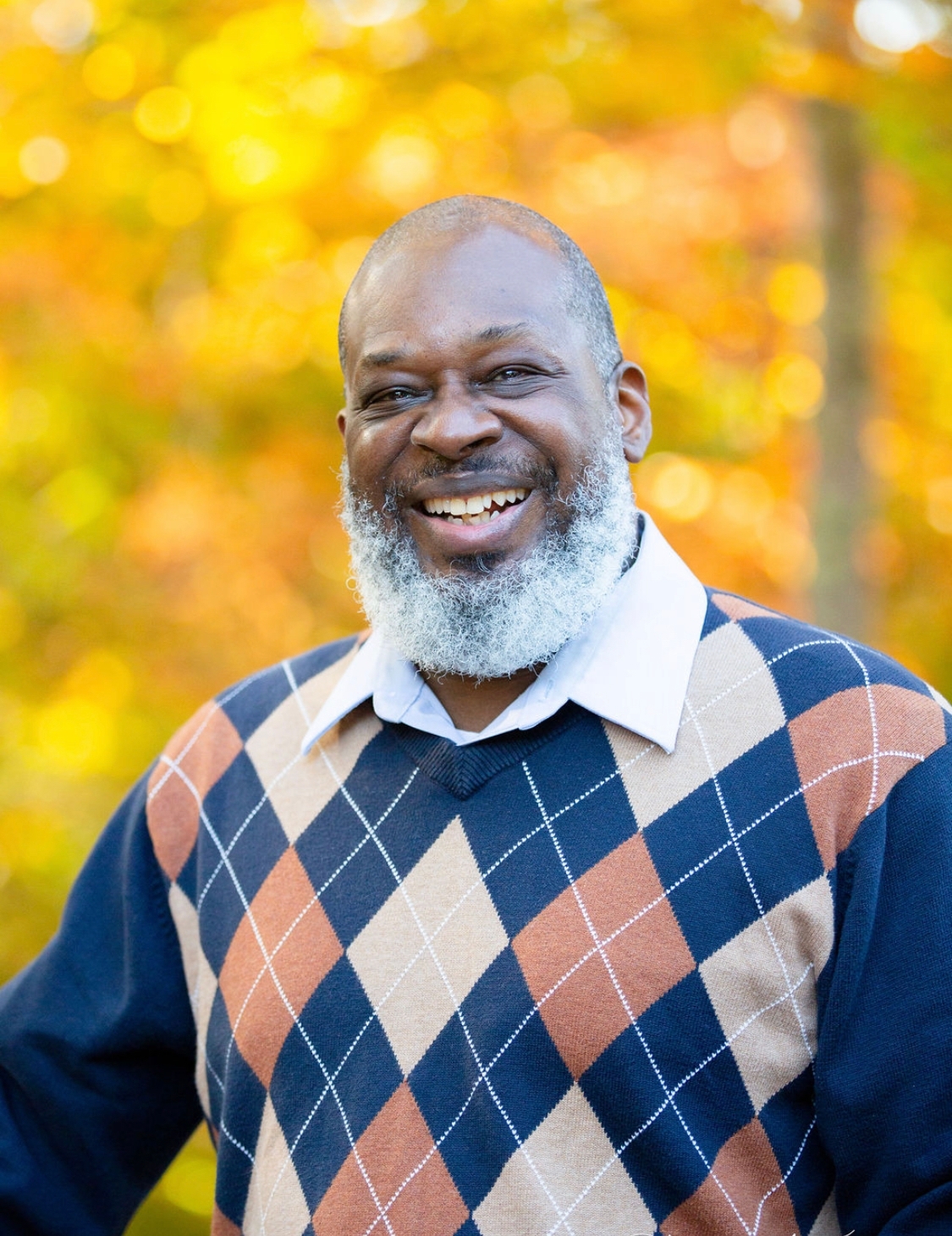
Welby Broaddus is an author, professional speaker, business consultant, trainer, and disability inclusion advocate committed to changing the conversation about employment and people with disabilities.
Born visually impaired, Welby brings both lived experience and professional insight to his work educating employers, human resource professionals, executives, workforce development professionals, and community leaders about the value that blind and visually impaired individuals bring to the workplace.
He is the author of Leading Blind Without Vision: The Benefits of Hiring the Blind and Visually Impaired, a book that challenges misconceptions surrounding disability and employment while encouraging organizations to recognize talent, ability, and potential beyond traditional perceptions.
Through Broaddus Business Solutions, Welby provides consulting, training, workshops, and speaking presentations focused on disability inclusion, inclusive hiring, workforce development, entrepreneurship, leadership, and professional development. He is also a SHRM Recertification Provider and holds a certification in Diversity, Equity, and Inclusion in the Workplace from the University of South Florida.
Welby’s commitment to advocacy extends beyond his professional work. He mentored visually impaired college students and is passionate about helping others overcome barriers that can prevent talented individuals from reaching their full potential.
At the heart of Welby’s work is a strong sense of empathy and fairness. He is deeply affected when he sees pe… Read More