Understanding Bias with Dr. ClauDean Kizart
What if the biggest barrier to opportunity isn’t intent, but the assumptions we never question?
In this episode of Changing Minds & Changing Lives, host Julie Sowash sits down with educator, author, and founder of LightWork Equitable Solutions, Dr. ClauDean “Dr. K” Kizart, to unpack how bias shows up in ways we often don’t recognize—especially anchoring bias, or our tendency to rely on first impressions and incomplete information.
Drawing from her own lived experience and years of research across education systems, Dr. K explores how early beliefs shape lifelong outcomes—from classrooms to careers—and why even well-intentioned people can unknowingly reinforce inequity.
Together, they break down the connection between bias, blind spots, and structural inequality, offering practical strategies leaders, educators, and employers can use to make better, more inclusive decisions.
If you’ve ever wondered why inequities persist, this conversation will change how you think about bias and opportunity.
Key Takeaways:
- Why bias isn’t just about intent—it’s about impact
- The difference between implicit, explicit, and structural bias
- What anchoring bias is and how it shapes decisions
- How early assumptions follow people from education into careers
- The connection between bias, blind spots, and systemic inequities
- Why “structures are made of people”—and what that means for change
- How in-group bias and herd mentality influence workplace decisions
- The hidden dangers of low expectations—especially for disabled talent
Resources & Links
- Email: dockizart@gmail.com
- Book: Beyond Implicit and Explicit Bias
- Lightwork Equitable Solutions LLC: https://lightworkeq.com/
About the Guest
Dr. ClauDean “Dr. K” Kizart is an author, educator, and the founder of LightWork Equitable Solutions. She is a nationally recognized literacy and equity consultant who has worked with school systems, higher education institutions, and organizations to better understand and address achievement and equity gaps.
Her work focuses on uncovering the deeper layers of bias that influence how we teach, lead, and make decisions. Through her research and professional development, she helps leaders move beyond intention to examine impact—equipping them with practical strategies to recognize bias and create more equitable outcomes. LinkedIn: linkedin.com/in/dr-claudean-kizart-11937622
About the Host
Julie Sowash is a strategic advisor, disability inclusion leader, and co‑founder of Disability Solutions. She is the CEO of Catch 22 Group and is the Job Board Doctor. LinkedIn: https://www.linkedin.com/in/juliesowash/
CMCL ClauDean Kizart Interview
June 16, 2026
Julie Sowash
Welcome back to Changing Minds, Changing Lives. My name is Julie Sowash. I am the co-founder and now strategic advisor for the Disability Solutions team. We have a great guest on for us today or joining us today, Dr. ClauDean Kizart, called Dr. K by a lot of her friends and colleagues, is an author, educator and she is also the founder of LightWork Equitable Solutions. She has spent her career asking a very important question that we're gonna talk about today: How do the beliefs we form early in life shape opportunities in not just our education, but ultimately in our careers? Her work focuses on covering deep layers of bias in education and beyond, which I think is such a fascinating topic. Her book, she's also an author, “Beyond Implicit and Explicit Bias,” invites us to take a look beyond intention and into impact. Doctor K, welcome to Changing Minds, Changing Lives.
ClauDean Kizart
Thank you so much for having me, Julie.
Julie Sowash
So tell me a little bit about you. You obviously have an impressive bio, but tell us more.
ClauDean Kizart
Thank you so much. So I am from south side of Chicago. And I went to college, like many people after high school were told that they needed to do. And I did not do so well when I first came out of high school to go to college. I actually flunked out of college three times before actually getting serious about college. And this story is relevant. Just hang on with me. And what made me get serious was I was working for a camp in St. Louis, Missouri. Camp Wyman, which is still around. So hey, Camp Wyman people. And one of my, the group that I had was a group of fifth-graders. And, you know, at most camps you do activities and things of that nature. So they gave me these activities to do with these fifth-graders. And some of it involved reading. Not like reading stories, but reading instructions for the activity. Like, you were supposed to give each student a card, and they were supposed to do something with the card and match something or another. And I noticed that a lot of the students, a lot of the campers in the fifth-grade group that I had couldn't read and couldn't read the cards, right? And so at that time, I was probably maybe 19, 20 years old, much more judgmental than life teaches you to be, right? So the older you get, I think the less, you know, if you're open to growth, the less judgmental you become, because you realize that we're all in this thing called life together, and you never know what somebody’s background really is that causes whatever it is that you think you're about to judge. So at the time I was hotheaded and, you know, I was young. And I said, what's wrong with these students, with these kids’ parents and their teachers? How these kids can't read? Their parents and their teachers ought to be ashamed of themselves. And this lady, Veronica Banks. Hey, Veronica Banks, Mama Banks. And Mama Veronica, she said, well, why don't you go to school to be a teacher and do something about it? [laughs] So the next morning, I got up and I went to Harris-Stowe State University. It's an HBCU in St. Louis. And the people there, I mean, you're talking about nurtured, lifted, challenged, pushed. You know, this myth that, you know, sometimes think that HBCU, that people just let you pass and it's completely the opposite. If anything, they're like, we're gonna get you ready for the world. [laughs] But I went to Harris-Stowe andI went straight to the financial aid office. Because, remember, I told you that I’d flunked out and didn't do so well my first couple of years. So I knew they just weren't going to give me money again, right? But I wanted to see if I did apply, if I got accepted, you know, which, my grades were horrible.
[laughs]
Like, if there was any kind of way that I could get accepted and if so, like, what would I do to pay for it? And so I'm telling these ladies in financial aid my story, and they're like, little girl.
[laughs]
We gon’ help you get your life together, right? And they did. Long story short, I became a work study student, and they pushed me. They pushed me to finish school. The first year I had, I applied for grants and I worked at night at the Gap. Pay the Gap. Because of course, I couldn't get financial aid, so that means I had to pay out of pocket because my grades and that kind of thing. So after the first year, listen, you talking about when people are in your life to. I ended up getting a scholarship, an alumni scholarship. Long story short, I graduated magna cum laude, was Miss Harris-Stowe State University, senior class president, delivered the senior class speech at our commencement ceremony and finished that degree in about, I think it was, like, three years. It wasn't a four year. It was, like, three years because I went to school in the summer, I doubled up. And, I mean, I was just being nurtured and pushed. And then shortly thereafter, I started teaching. And I noticed that I did not have the I didn't have the skill that I needed to help all of my students. Like a lot of first teachers, we learn breadth, we don't learn depth, right? We learn just enough to get that degree and get us in school. I mean, and get us in the classroom. But I had students who were reading on the second-grade reading level. I was teaching fifth grade. Second-grade level, seventh-grade level, 12th-grade level, fifth-grade level, first-grade level. I was like, how in the world am I was supposed to teach all these kids on these different reading levels? So I went back to school and got lifetime teaching certification for literacy and became a literacy trainer for the state of Missouri. And then after that, literacy and equity trainer for the state of Missouri, where I would then start looking at data to support school districts and colleges and universities to understand why they had these, at the time, it was called achievement gaps. Equity, the word equity didn't come around until maybe 2015. And so we were looking at achievement gaps and then later equity gaps, right? And why they existed. And my job was to look at the data and support those school districts in understanding not only why they existed, but what strategies were needed to close the achievement and equity gaps. And I use those words synonymously because they are synonymous terms.
Julie Sowash
Ok.
ClauDean Kizart
If there's an achievement gap, there's also an equity gap. Someone, some students are not getting what they need to to be successful, right? So that's the, that's what led me to even the study about biases, because I really wanted to understand what happens, really, in education, where well-intentioned people, where brilliant people and brilliant students and a lot, for the most part, well-intentioned what happens where these in some of these school districts, we have such achievement gaps and equity gaps? Like, what happens? And I dug into research about mindset and blind spots. And of course I was like, well, so I am inquisitive. Some people would say nosy.
[laughs]
And I was like, well, what causes the blind spots? And what causes the mindset shifts and that kind of. And I learned that it's our biases. And I wanted to know, well, what kind of biases are they? So a lot of my research really started with me being nosy and me being curious about, well, what's under it? And part of that I have to give shout out to my mother Creola cuz our Hampton in Chicago.[a] She always talked to us about the fruit of a tree in order to. When you look at the fruits of a tree, you have to look at its roots, right? And so I look at, well, what are the roots? And the roots of achievement gaps and equity gaps are often our mindsets, often student mindsets, our blind spots, students’ blind spots, parents’ blind spots. And that the base of that and at the root of that are what we call biases. Biases are like smog. That’s what Dr. Beverly Tatum says. Everybody has a bias, right? We are picking up things all the time in our environment. So it's not that it's about race or gender. It's about the way that we think about things and the way that our brain takes these shortcuts to make decisions, because our brains want to do what is the easiest to do. It just wants to make the decision and move on because it doesn't like being overwhelmed.
Julie Sowash
Yep.
ClauDean Kizart
And so it relies on these short, these cognitive shortcuts that we call biases.
Julie Sowash
Which we’re learning that AI also does the same now. So tell me, what is a blind spot in your particular? Tell me what that means.
ClauDean Kizart
So a blind spot is literally a spot that we can't see, right? It's a spot that we don't. And I have a tendency, somebody told me a long time ago, that I have a knack for the obvious. And so sometimes and when they said it, they didn't say it as, like, a compliment. It was like, you know, you just have a knack for the obvious. But, somebody later on, this guy named Cortez Bernard, peace and light to his spirit, told me that that's actually a, that's actually a gift. He was like, you know, just because you can see the obvious doesn't mean that you maybe you're one of those people who need to understand and see the obvious, right? And so to me, I'm not gonna give you the textbook definition of blind spot. I'll give you the this is what it is. It's what you can't see, right? Something is blocking you from seeing something. Something is blocking you from understanding something. It could be physical. It could be awareness. It could be understanding. That's what blind spots are.
Julie Sowash
Ok.
ClauDean Kizart
It’s spots that you cannot see where something is missing.
ClauDean Kizart
So, would you say that you’re -
ClauDean Kizart
And actually if you think about it, real quick.
Julie Sowash
No, go ahead.
ClauDean Kizart
In your car, we all have blind spots.
Julie Sowash
We do.
ClauDean Kizart
If you're a truck driver, they have on the side, on the back of the truck. This truck has a blind spot. If you're here, it cannot see you. So if we are, if we think about that from a metacognition and a cognitive standpoint, right. If we cannot see this thing. So I would say for example with anchoring bias, because that was one of the things that your colleague Ashley reached out to me about was we want to learn more about anchoring bias.
Julie Sowash
Absolutely.
ClauDean Kizart
So just even thinking about that. We anchor on to information that we know.
Julie Sowash
Ok, so in your first example of being a judgy kid, which I have myself been, and it took me a really long time to get through university. So we are on the same page, ma'am.
[laughs]
Would your reaction to the kids who were struggling? Is that because you had blind spots? Because you had not been a parent, because you had assumptions and biases around what parents should be accomplishing?
ClauDean Kizart
Oh my goodness, yes.
Julie Sowash
Ok.
ClauDean Kizart
That is, so I responded like that because one of my friends, Cindy. Hi Cindy. She and I were just talking on Friday. We haven't seen each other in months and even that is a. I’ll tell you the quick, quick, quick story about quick, quick, quick, because this is an anchoring bias story, right?
Julie Sowash
Ok.
ClauDean Kizart
So when we, when I relocated to Virginia, I don't know how to put together furniture. And that's just not my thing. And so Ikea. I had ordered some furniture from Ikea and Ikea was like, well, we have this service called Taskrabbit.
Julie Sowash
Mmhmm.
ClauDean Kizart
They'll come, you know, pick up, put up your furniture and that kind of thing. I said, ok, great. So Taskrabbit, they were, you know, it was a bunch of men on Taskrabbit. No shame to men, you know. Thank you for the heavy lifting and the coexisting that you do. I think we're all important. And so after maybe the fifth piece of furniture and the fifth Taskrabbit guy, my daughter says, Mom, are there not any handywomen? Like, are there not any women that put together furniture and do things, you know? And I was like, huh. So I went on Taskrabbit and I intentionally looked for a woman. And the only woman that I could find was Cindy.
[laughs]
Julie Sowash
Really?
ClauDean Kizart
And that was four and a half years ago. So just, you know, by and again, that was a moment of anchoring. Like, in my mind, it just, we anchor it. When it's time to fix something, we call on men, right? But my daughter just being naturally, like, pro-woman and pro-people all at the same time was like, wait a minute. I noticed something here. And Cindy and I became very great friends. And so it's been four and a half years. And so we were out the other night on Friday, and we were talking about this very subject. And I will tell you, Julie, it's funny that you ask me because my standpoint on this is totally different than it was when I was 19, 20. But I hadn't thought about it until you just asked me the question.
Julie Sowash
Interesting.
ClauDean Kizart
Because she was like, well, you know, these kids, they can't they're not doing well in school. And it's because of this, that and the other. And I was like, well, Cindy, gotta give teachers grace. Gotta give parents grace. A lot of people don't know how to teach literacy, how to teach reading. A lot of, you know. So to me, it's about, well, how do we now reach the parents? How do we now reach the teachers? She's like, well, they should go to professional development. Well, there's a problem there, because in order to go to professional development, you need to have a substitute teacher for your class. And there's been shortages of substitute teachers all over this country for years, right? And so, and then, in some school districts there's a shortage of professional development funds. So some people, some teachers are getting quality professional development and some people are not getting quality professional development. And so if you're not getting quality professional development, then that means it is difficult for you to implement best, you know, best practices, and new best practices and things of that nature because you don't even know them, right? Unless you have job-embedded professional development, which should research base should be ongoing. So not just one stop shop, like unfortunately some professional development is. Which is why in my business, LightWork, when I facilitate professional development, I prefer for a school and I mean I will do the one stop shop, but I always advocate for the ongoing because that's when the magic happens. That's where the change happens. When you can go into a school district and I do have some corporate clients, and you can cultivate relationships and facilitate professional development and then go review and go observe and then sometimes go model whatever the strategies are so that you, teachers, learn in-depth, not just in breadth. You support teachers in looking at data, support administrators in looking at data. Implement strategies, observe if the strategies are working, tweak and, you know, tweak where necessary. And that requires ongoing professional development.
Julie Sowash
Yeah, and ongoing data review. So, tell me. You talked about implicit bias. We know about explicit bias. I think those are terms that most of us are comfortable with in my history, or at least in my work. What I've seen is that people are very uncomfortable with grasping structural bias.
ClauDean Kizart
Yeah.
Julie Sowash
Because we are so built, especially as Americans, I will say, as a pull yourself up by your bootstraps, figure it out, work harder, work faster, work better. And you talk about in your book, you know, what goes beyond implicit and explicit bias, really? Like what are we missing about structural bias in today's conversations that would really help the everyday listener understand how impactful they are? And, this sounds dumb to say, but how embedded they are in our society?
ClauDean Kizart
Yeah, so I hope you and your listeners like me after this. And I hope that after I answer this question that your listeners go, ok, we're gonna buy that book and we're gonna do a book study on that book.
[laughs]
Structures are made of people.
Julie Sowash
Ok, tell me more.
ClauDean Kizart
So when we talk about systems, people talk about systems of government and structures. Structures are made of people. We cultivate the structures. And when we get into certain positions, we either continue that structure or we start to dismantle that structure with our decisions, right? And so it's, for me, conversations about structural bias still need to happen at the level of conversations about biases period, right? Structural bias is an effect. It's not a cause, right? The cause to structural bias is anchoring that bias, is halo effect bias, is Dunning-Kruger Effect Bias, is various types of biases, because those biases build the structure.
Julie Sowash
Ok.
ClauDean Kizart
Right? And so when we talk about structural bias, I think it’s important to understand that’s an effect of biases. Because the biases have now built the structure.
Julie Sowash
Ok, so that makes sense to me when when you say that. So let's say as a young educator, a young professional or even a seasoned leader, you are entering structures that you haven't built, so your bias hasn't built them. How do you help to recognize that there are biases in the structures that you're existing in?
ClauDean Kizart
Chapter Six.
[laughs]
We will put the book link in the show notes, guys, we promise. Chapter Six, Chapter Six is on in-group bias. Some people may call it herd bias, not herd mentality bias, another one. But in-group bias or intergroup bias happens when we become part of a group and then we want to assimilate. to part of that group, right?
Julie Sowash
Ok.
ClauDean Kizart
As opposed to, we don’t want to stand out. We don’t want to be othered. So sometimes we start othering, because we don’t want to stand out, right? We don’t want to be the oddball out, right? And so then that in-group bias then builds relationship with herd-mentality bias, because herd-mentality bias is I’m just gonna go along with the herd, with whatever is happening, with whatever they say, so that I’m not on the out group. Because I want to be on the inner group.
Julie Sowash
Right.
ClauDean Kizart
I want to be part of the in-group. So I’m gonna make the decision, I’m gonna go along with the decisions that are made. I’ll give you an example from Chapter Three in my book. And this is a true story. And so, of course, I never say school districts or people and things of that nature. But I was in a meeting, right? And in this particular meeting, and we call them data team meetings. It’s when you’re intentionally looking at data from various classrooms and various students. And you’re comparing the data. And then you try to, your goal is to figure out, like, if there’s a particular assignment that was given across third grade, like, how did the third-graders do in this class and this class and this class? What methods did this teacher utilize so that these students were successful? Ok, then maybe this teacher needs to use the same. It’s collaborative learning with teachers, right? An amazing method. I think it should happen across the country. And so in this particular data team meeting, I was, my job was to support them in developing, in looking at the data objectively, right? And then coming up with strategies to support students who needed additional support and to support students who actually were above grade level, so that they also would get additional support, right? Now, sometimes we talk about those mid and bottom-level students, but those students who are actually soaring, they need support too to keep on soaring, right? And so I was in this data team meeting. There were probably six teachers in there, all women. And I mean, it was amazing. We were talking and strategizing. You know, so many amazing and wonderful ideas that were just [snaps fingers] Principal walks in the room. Male principal. I was floored. Male principal walks in the room. And he sits at the head of the table and, you know, he asks you know, how we doing? You know, what’s some of the feedback? Catch me up. And so, first thing I notice was the energy, right? What was, like, this vibrant, like, ok, idea. And I can do and then I do this. That shifted, except for with one teacher. The one teacher was the youngest teacher in the room. All the other teachers were what we call more seasoned teachers. So they, you know, had been at the school district, some, one lady was like, she was like, this was her 22nd year, right? So we’re talking about 10 years plus. And then the one teacher who just, who kind of looked around and continued the conversation was, she was a first-year teacher.
Julie Sowash
Ok.
ClauDean Kizart
And I was amazed that, you know, so she caught the principal up. You know, where they were. And he said, well, you know, continue on. Like, what strategies, suggestions do you all have? And they asked him. They were like, well, what do you think we should do? And so, the one younger teacher, the teacher who was the first-year teacher, she was like, well, we talked about, we talked about some strategies that we were going to use and the rest of them were silent, right? And so, really, he ended up taking over the meeting. I don’t think that was his intention. It may have been his intention. I don’t know what the former culture of the school was. But this wasn’t the first time that I saw that. And it was like, all these ideas, right, were being shared. And then when this, when the principal walked in, it was like, I don’t know. There was like an unwritten rule that we need to do whatever he now says. Now, again, it could’ve been something, you know, in the culture, or something about his administrative style. But what I do know was the herd changed, right?
Julie Sowash
Right.
ClauDean Kizart
The herd started, it was like watching, and I don’t want to compare, I’m not gonna compare people to animals, but I do watch a lot of Wild Kingdom on Sundays. Like I love to watch, I do. And it’s my thing. The birds and the oceans. To me, it’s just really relaxing to not watch people on TV, but to learn about the world. But herds happen even in nature.
Julie Sowash
Mmhmm.
ClauDean Kizart
Right? So it’s not that it’s something wrong with the herd, with, you know, wanting to be, wanting to belong. It’s that when you are changing yourself and not sharing your ideas that would then benefit the whole, that’s when the problems happen.
Julie Sowash
Right. No, that makes sense. That's a great example. And I love when the young teacher doesn't know yet to follow the herd. So let's talk a little bit about you. You've mentioned a term a couple of times that I think our viewers are gonna be relatively, is gonna be relatively new for. And that's anchoring bias. So tell us, tell us what that means.
ClauDean Kizart
So again, there are over 200 biases. And so, I wanna kinda go to we talked about implicit and explicit. For something to be explicit, that means it’s clear.
Julie Sowash
Yeah.
ClauDean Kizart
Right? For something to be implicit, that means it’s kind of suggested or hinted at, right?
Julie Sowash
Mmhmm.
ClauDean Kizart
You also have conscious and unconscious bias. Conscious bias would be explicit bias, like, it’s clear. It’s a clear bias. Unconscious bias would be suggested, hinted at, because it’s coming from the subconscious. A person is not fully aware of their thinking. Like, they’re not doing that meta cognition, that thinking about their thinking. So in this space of conscious and subconscious bias, implicit and explicit bias. Those are umbrellas, right? But under each bias there are different types of biases, right?
Julie Sowash
Ok.
ClauDean Kizart
So there’s different types of implicit biases, suggested, biases that are, like, suggested, hinted at. You don’t really know that you’re doing it. And there’s different types of explicit biases, like, you know what you’re doing. You just don’t know what to do about it.
[laughs]
Right? You’re kinda like, you know, people who know that you really should get up in the morning and go for a jog, right? Because you know you really want to.
Julie Sowash
You should.
ClauDean Kizart
But there’s that disconnect between what you know and what you’re doing. That’s explicit, right? That’s not subconscious. It’s explicit.
Julie Sowash
Yep.
ClauDean Kizart
And so anchoring bias is a form of implicit bias, right?
Julie Sowash
Ok.
ClauDean Kizart
Because it’s suggested. It’s not always, the person doesn’t always know that that’s what they’re doing.
Julie Sowash
Ok.
ClauDean Kizart
Right? And I really do think that for the most part, we as human beings, we’re good. We’re good, we’re good, right? And I think, especially teachers, right? I think there are way more good teachers in this world, than bad teachers. Way more. And so I think that and I choose to believe and I choose to think that one of the reasons it’s important for teachers to discuss and talk about and navigate through biases is because we really want to do a good job. We really want to support all of our students. And so with anchoring bias, anchoring bias happens when we, again, anchor to the first piece of information that we know.
Julie Sowash
Ok.
ClauDean Kizart
Right? And this is what’s interesting. Anchoring bias, I’m gonna read just one little line from my book. Anchoring biases is one of the most widely-studied biases. This is from page 71. With more than 13 research-based books and published articles, it first appeared in a paper published in 1974.
Julie Sowash
Wow.
ClauDean Kizart
By Amos Tversky and Daniel Kahneman titled “Judgment Under Uncertainty: Heuristics and Biases.” So, we’re talking about a bias that has been studied since 1974.
Julie Sowash
Wow. And this is the first time I've heard about it. And this is what I do for a living. So tell us more.
ClauDean Kizart
Mm-hmm. So, first, anchoring bias, again, it happens when we anchor to the first piece of information that we know. And then we start looking to confirm that information.
Julie Sowash
Ok.
ClauDean Kizart
Which is actually another bias called confirmation bias, right? It’s when you, like, as human beings we want to be right, right? But as educators, we have to be mindful that as we’re teaching our students that all that we know we know not, we have to make sure that we’re continuously learning too.
Julie Sowash
Right.
ClauDean Kizart
And I think for the most part that, I think for the most part, teachers do. I want to read a scenario from the book that is anchoring bias, ok. So I taught a student in sixth grade, I’ll call her Shayna, who often acted disrespectfully. Her tone of voice and the harsh statements she made in class resulted in her being removed from one sixth-grade classroom and placed into mine. One day after Shayna cursed at another student, I called her mother to discuss my concern about her behavior. Shayna’s mother quickly asked me to give her daughter the phone. When her daughter took the phone, I heard her mother yell at her and use profane language strong enough to make an adult run for cover.
Julie Sowash
Wow.
ClauDean Kizart
I quickly regretted calling. When Shayna got off the phone, she turned to me and she put her head on my shoulder and she cried. As tears rolled down her face, all I could do was console her. The same student who behaved so inappropriately and was incredibly harsh to others, to other students was not tough at all. Shayna’s behavior at school reflected what she was experiencing at home. Instead of shaming her, I began to work with her on learning how to communicate with clarity and a cool head. I shared with her that old adage that my grandmother shared with me: There is a time and a place for everything. Over time, Shayna started to catch herself before saying hurtful things in class. Instead of flying off the handle, she would take deep breaths as we practiced and choose different words to express her frustration. Witnessing this interaction between Shayna and her mother, I was able to expand my understanding of how she showed up in class. She was not just a student with bad behavior, a judgment which I initially and the school had initially, anchored in our thoughts. She was a very bright student who began to soar academically, especially in creative writing. I learned firsthand that people are more than the stories we anchor to.
Julie Sowash
I love that. I love that. So the first piece of information, for example, a student has an IEP could be then the strongest piece of information that we use every other action to act or every other act, every other decision that we act on. Is that a fair statement?
ClauDean Kizart
Yes.
Julie Sowash
So I love the simplicity of how you just explained it. And something that I say a lot about our community, the disabled community in this case, is that we suffer from the low, the bar of low expectations.
ClauDean Kizart
Yes, yes.
Julie Sowash
And so, you know, I can tell you how many times I've seen a, you know, a young person coming out of high school, coming out of university, they've had an IEP and they have anchored that to themselves. And their parents have anchored that to them. And their teachers and educators have anchored that to them. And again, to your point, I don't think that these are things that were done with malice or ill intent. It just became sort of the zenith of who these kids are, even though it is very much just a part of who they are. And I think your story really exemplifies that. So, you know, what as an educator, can we or would you advise when we start seeing anchoring bias in our own behavior or in our team's behavior so that we can start making adjustments? And we, generally speaking, at Disability Solutions, talk to an employer base. So it maybe think, you know, from going away from the classroom but into careers.
ClauDean Kizart
Yes.
Julie Sowash
How do leaders help create that change within their organization?
ClauDean Kizart
I’m glad that you asked that question because you know there’s a connection between schools and careers, careers and schools. And so when I initially, when we first started talking, I made a point to share that as a consultant, I work with schools and businesses, right? Because it’s that pipeline, right? And so, some businesses are asking the same types of questions, are wanting the same types of professional development and training, right? How do we recognize our biases? But also then after we recognize them, how do we get beyond them? This is why the book is “Beyond Implicit and Explicit Bias.” Play on words. So after we get, after we understand, what do we do? So, first thing, I think it’s important to know what type of bias you may be navigating through, right? And so at every chapter in my book, there is a checklist that has descriptors of that bite.[b]
Julie Sowash
Great.
ClauDean Kizart
And you ask yourself. And it’s meant for people to stop and reflect. And so, like, in the chapter on anchoring bias, it says, like, one of the descriptors is I tend to lean on prior knowledge and experience when dealing with people whom I have favorable relationships. And you can check most of the times, sometimes and never. I take my time to consider all sides of the situation before making a decision. Most of the time, sometimes, never. And so there’s several descriptors. And so you can, like, seriously do a deep dive this summer. And ask yourself and go through these descriptors. And so then I offer a lot of tips on now how to move beyond those biases. So for anchoring bias particularly, the first question is to ask yourself what decision needs to be made.
Julie Sowash
Ok.
ClauDean Kizart
Right? Not to make it quickly. And then ask, who needs to be part of that decision making?
Julie Sowash
Ok.
ClauDean Kizart
I give a great example. If you are making a decision. There’s a woman here in Virginia Her name is Janice. She is amazing. And part of what makes her amazing is she developed a disability when she had a stroke. And so she remembers and knows the life of not having a disability. And now is living a life with a disability. And so she has been a force in Hampton Roads to support people in understanding how to support people who have disabilities, right? And who are living with disabilities. And so, we had this meeting about transportation. And, you know, it was clear Janice needs to be at this meeting. So she comes to all the transportation meetings. Why? Because when we’re talking about transportation and we have to consider people with disabilities, and no one else in the room has a disability, right? Then you need to include people at the table. So part of the question when you’re talking about anchoring bias, is who needs to be in the room? Who needs to be at the table? Who needs to be part of this decision, right?
Julie Sowash
Yeah, absolutely.
ClauDean Kizart
That means that it may take time. And be ok with that. Because we would rather take the time to make good decisions that are beneficial for our students, our educational systems, and for our workplaces, than to quickly make a decision that we may have to unravel because it didn’t work.
Julie Sowash
Right.
ClauDean Kizart
So that’s one. Remember that anchoring bias is the brain’s way of taking a shortcut. Refuse to take the easy way out.
Julie Sowash
I like that.
ClauDean Kizart
If there is a decision you need to make, make sure to diversify the committee of people to weigh in on the decisions. This helps to ensure that there are differences of thoughts, perspective, experiences that will help us to make informed decisions. Intentionally listen to different podcasts.
Julie Sowash
Yay. Love it.
[laughs]
ClauDean Kizart
Or independent news sources to learn from a variety of perspectives on a regular basis. Avoid toxic positivity. That is saying things are ok when they’re really not. If you’re not in a mood, take a moment or two to collect yourself emotionally before making a decision. And get mentors, right? Consider that we must not let our first thought be our last thought. That’s coming from Sharroky Hollie’s book. Do not let your first thought be your last thought. And then, one of the other ones is remember that it’s ok not to know.
Julie Sowash
That's an important one, because too often we think that we need to know. And we don't ask the right people for help. I love that.
ClauDean Kizart
Exactly, exactly, exactly. So those are just some of the strategies that particularly support with navigating through anchoring bias.
Julie Sowash
Ok. No, that's really helpful. I have learned a lot today. And obviously there is a lot more to learn. If our listeners, viewers want to get a hold of you and learn more about your book or the solutions you provide, how do they find you?
ClauDean Kizart
You go to my website. It’s lightworkeq.com. So just all lowercase: lightworkeq.com. You can also email me at lightworkeq@gmail.com. You can follow me and connect with me on LinkedIn at Dr. ClauDean Kizart. Again, Dr. ClauDean Kizart on LinkedIn and Facebook. Not yet started Instagram. Some say I should.
[laughs]
Julie Sowash
Don't do it.
ClauDean Kizart
I have a site that’s just about, I mean it’s such consistency that’s needed in all these social media networks. And it’s just, how do you switch yourself up to do it. So, those are the three that are the most stable is lightworkeq.com and email lightworkeq@gmail.com or on LinkedIn.
Julie Sowash
Wonderful, wonderful. Thank you so much. Thank you for taking time on a holiday. Thank you for the work that you do. It's so incredibly important for us to understand and for educators to understand how to better impact the young people that they are changing the lives of every single day. You guys, another great episode of Changing Minds, Changing Lives is in the books. Tell me what you think. Tell me who you want to hear from next. And what guests we should have on the show. ‘Til next time. Bye.
ClauDean Kizart
And just as an FYI, I’m happy to come back and talk more about decision fatigue bias.
Julie Sowash
Ok, ok.
[laughs]
Ok, you heard it here first.
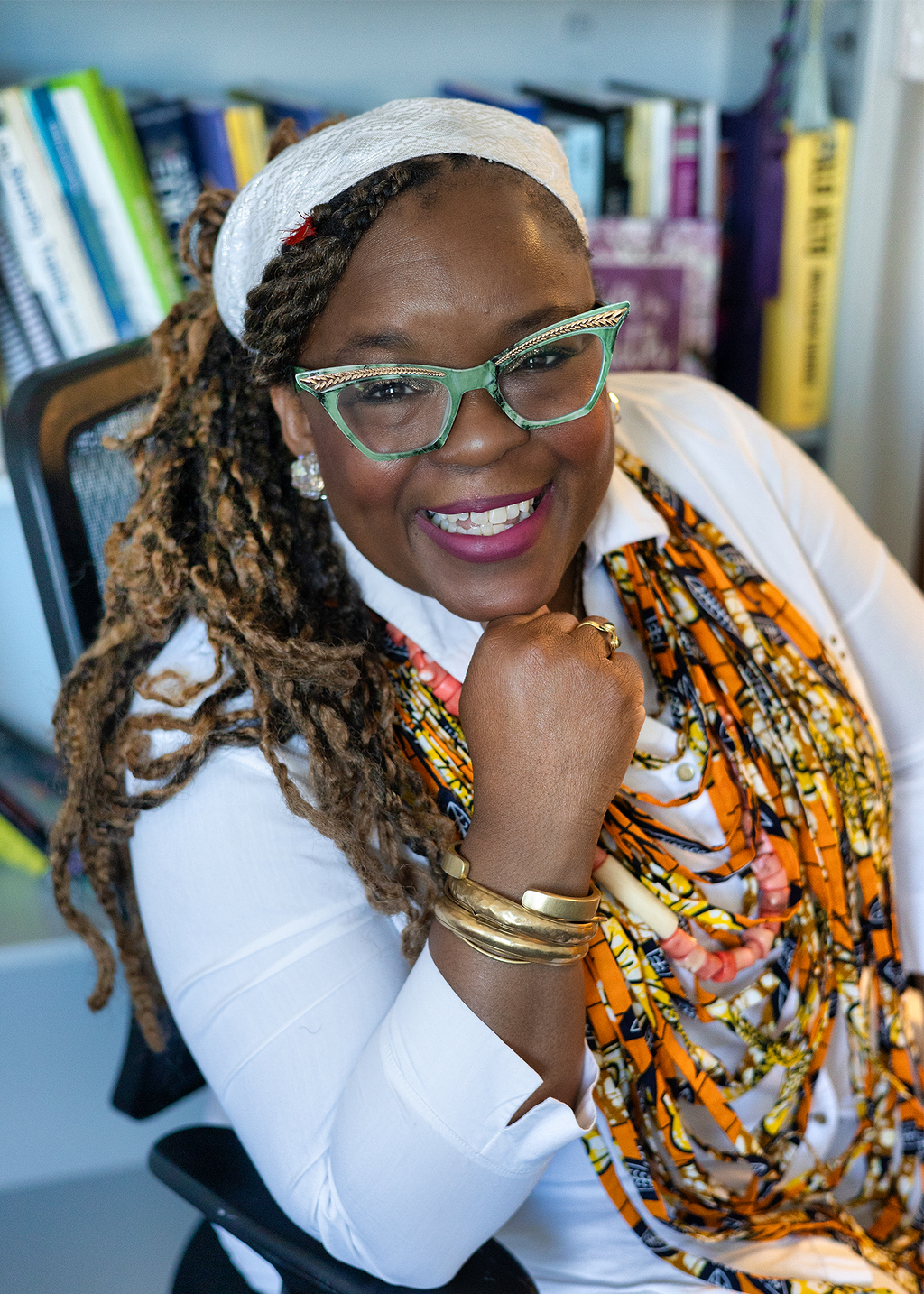
Author and Founder of Lightwork Equitable Solutions
Dr. ClauDean Kizart, is a nationally recognized leader and proprietor of Lightwork Equitable
Solutions LLC, a consulting firm that supports schools, nonprofits, and businesses in
strengthening organizational climate, cultural responsiveness, and social impact. With over 25 years in education, Dr. K is also the
author of Beyond Implicit and Explicit Bias: Strategies for Healing the Root Causes of Inequity
in Education, offers practical strategies for building awareness and promoting healing-centered
approaches towards equitable solutions for ALL!